

Table of Contents
- What Professional-Grade Foot Care Actually Means
- Medical Pedicure vs Regular Pedicure: Key Differences
- Why Best Foot Care Products for Nurses Matter
- Infection Prevention Through Clinical-Grade Sterilization
- Treating Common Foot Problems: Calluses, Corns, and Cracked Heels
- How to Choose Foot Care Products That Work for Your Needs
- Building Your Professional Foot Care Routine at Home
- Frequently Asked Questions
Last Updated: October 12, 2026
What Professional-Grade Foot Care Actually Means
Professional-grade foot care goes beyond a quick spa visit. It's clinical-level treatment designed to address real foot health issues. At Stomp Footcare, we understand that why choose professional grade foot care comes down to one thing: results that last.
Professional foot care uses clinical-grade sterilization, specialized tools, and evidence-based techniques. The focus is prevention and treatment, not just polish and comfort.
Here's what sets professional foot care apart from standard spa pedicures:
- Uses sterile, clinical-grade instruments
- Performed by trained foot-care professionals
- Targets specific foot health concerns
- Prevents infection and fungal problems
- Addresses calluses, corns, and cracked heels systematically
Professional foot care is preventive medicine for your feet. It stops small problems before they become painful ones.
Medical Pedicure vs Regular Pedicure: Key Differences
A regular pedicure prioritizes appearance. Professional foot care prioritizes foot health.
The difference matters. Regular pedicures use shared footbaths and standard tools. Cross-contamination is a real risk. Bacteria and fungi spread easily in warm, moist environments.
Professional foot care uses clinical-grade sterilization. Each tool is individually sterilized. Footbaths are either single-use or thoroughly disinfected between clients. The environment itself is designed to prevent infection.
Here's what you actually get with professional foot care:
|
Aspect |
Regular Pedicure |
Medical Pedicure |
|---|---|---|
|
Sterilization |
Standard |
Clinical-grade |
|
Tool reuse |
Shared tools |
Individual/sterilized |
|
Footbath |
Shared, chemical rinse |
Single-use or clinical disinfection |
|
Focus |
Appearance |
Foot health + appearance |
|
Specialist training |
Cosmetic |
Clinical/podiatric |
|
Infection prevention |
Minimal |
Primary focus |
The cost difference is real. But so is the risk difference. One prevents problems. The other doesn't.
Why Best Foot Care Products for Nurses Matter
Nurses, nursing assistants, and other clinicians working 12-hour shifts are a useful test case for any foot-care product, because their feet are exposed to the exact conditions that break down skin: prolonged standing on hard floors, repeated friction inside closed shoes, and limited time to reapply anything mid-shift. If a formula holds up under those conditions, it will hold up for most other people too.
What actually matters in a product for this use case:
- Absorption speed. A cream that stays tacky for 10 minutes is a cream that never gets used on a shift. Look for formulas that disappear into the skin within a minute or two.
- Occlusive plus humectant ingredients. Humectants like glycerin and urea pull water into the stratum corneum; occlusives like jojoba oil, shea butter, or petrolatum slow water loss afterward. One without the other gives short-lived results.
- Keratolytic actives for callus-prone skin. Salicylic acid and urea are the two most common over-the-counter keratolytics. Salicylic acid softens and helps shed dead skin; urea both hydrates and, at higher concentrations, thins thickened skin.
- No added fragrance where possible. Fragrance is a common trigger for contact dermatitis, and nurses are already at higher risk because of frequent hand and foot washing.
- A format that survives a shift. A cream applied before socks and shoes in the morning is more useful than a treatment mask that requires 20 minutes of downtime.
A practical pattern that many foot-care clinicians recommend for shift workers: apply a urea- or salicylic-acid-based cream at night to clean, slightly damp skin, cover with a thin cotton sock, and let it work while you sleep. During the day, use a lighter, fast-absorbing lotion only if skin feels tight. This splits the heavy exfoliation and hydration work into the hours when you are not on your feet.
Stomp Footcare's Hydrating Foot Cream is built around jojoba oil and aloe vera for the occlusive-and-soothing side of that routine, while the Intensive Callus Remover uses salicylic acid for the keratolytic step. Used together on a consistent schedule, they cover both halves of the problem.


One caveat worth stating plainly: nurses with diabetes, peripheral neuropathy, or poor circulation should not self-treat calluses or corns with drugstore acids or blades. Those are the exact situations where a podiatrist or a clinician-supervised professional foot care is the safer choice, and that distinction is covered in the provider-selection section below.
Infection Prevention Through Clinical-Grade Sterilization
Infection is the reason why choose professional grade foot care. Fungal infections, bacterial infections, and ingrown toenails all start with contamination.
Shared footbaths are breeding grounds. Fungi and bacteria thrive in warm water. One infected foot contaminates the whole tub. Everyone after gets exposed.
Clinical-grade sterilization breaks this chain. Each tool is individually sterilized using heat or chemical protocols. Footbaths are single-use or thoroughly disinfected. The environment itself prevents cross-contamination.
What this means in practice:
- No shared tools between clients
- No reused footbath water
- Instruments sterilized at high temperatures
- Chemical disinfection between treatments
- Separate clean zones for each client
High-risk feet need this protection. People with diabetes, poor circulation, or compromised immunity are vulnerable. A minor infection becomes serious fast. Prevention isn't optional. It's essential.
Professional foot-care environments are designed around infection prevention. Appearance comes second.
Treating Common Foot Problems: Calluses, Corns, and Cracked Heels
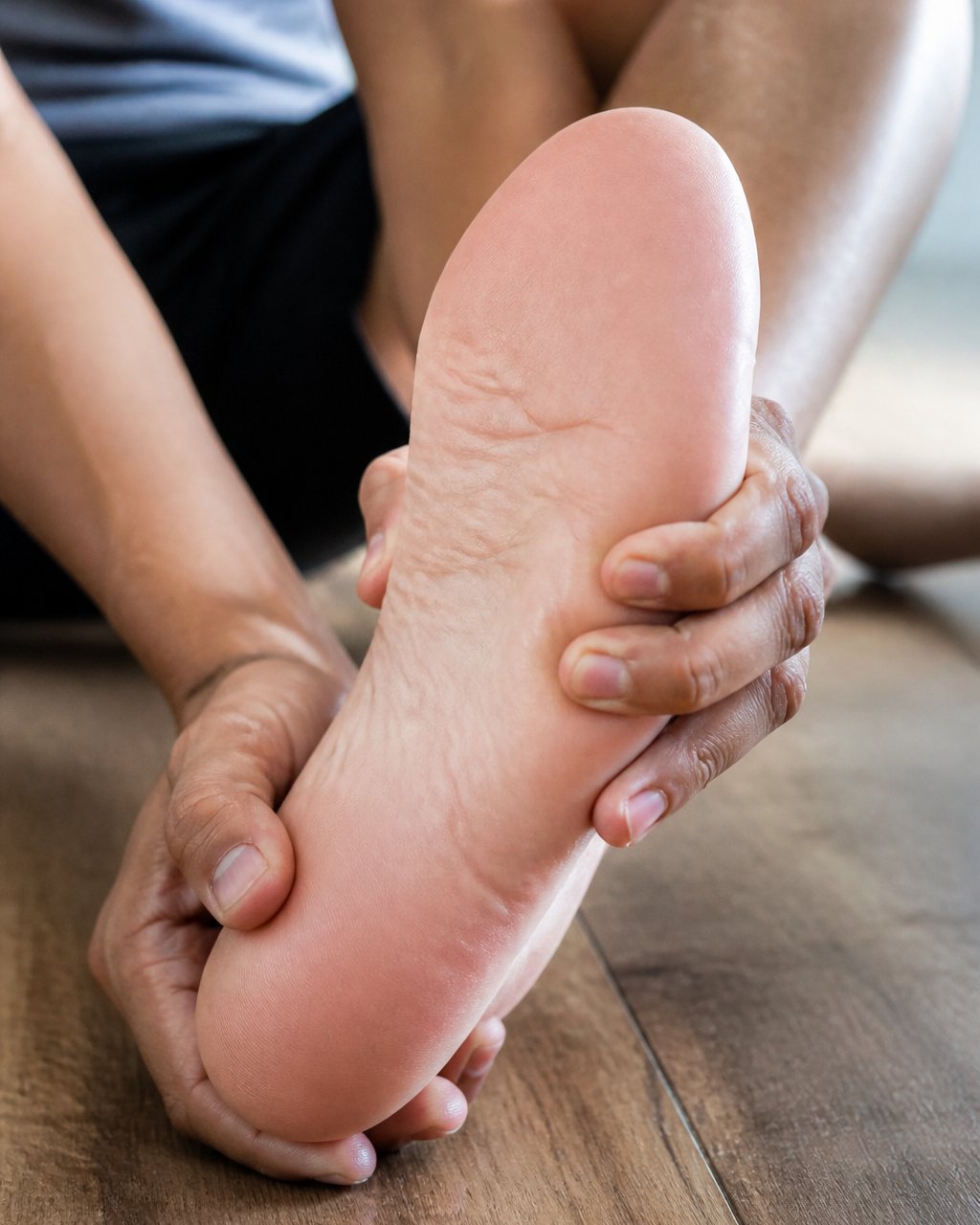
Close-up of a person's foot showing healthy, smooth skin texture on heel and ball of foot after professional foot care treatment, with callus-free areas and proper moisture balance visible in natural lighting
Calluses, corns, and cracked heels are preventable. They're also treatable. Professional foot care addresses them systematically.
Calluses form from pressure and friction. Your body hardens skin to protect underlying tissue. But thick calluses crack. They hurt. They look rough.
The Intensive Callus Remover uses Salicylic Acid to soften and dissolve dead skin.
Corns are concentrated calluses. They form on toes where pressure concentrates. Corns are painful. They need targeted treatment.
Cracked heels result from dry skin and pressure. Walking splits the skin. Cracks get deeper. Infection can follow.
The Hydrating Foot Cream prevents cracked heels. It locks in moisture. Urea and Aloe Vera soften hard skin. Regular use stops cracks before they start.
Professional treatment combines exfoliation, hydration, and protection.
How to Choose Foot Care Products That Work for Your Needs
Most foot-care products fail for one of two reasons: the active ingredient is too weak to do anything, or it is the wrong ingredient for the problem. Matching the active to the concern is the whole game.
Match the active ingredient to the problem.
- Dry, tight skin without thickening: urea (roughly 5-10%), glycerin, or a ceramide-based cream. These are humectants and barrier repair agents, not exfoliants.
- Thickened callus or heel fissures: urea at 20-40%, or salicylic acid at 6-17% in an over-the-counter preparation. Both soften keratin so it can shed; urea also holds water in the skin, which is why it is often preferred for heels.
- Corns: salicylic acid in a targeted patch or gel, used only on the corn itself. Never apply keratolytics to surrounding healthy skin or to broken skin.
- Odor and mild fungal concerns: tea tree oil has modest antifungal and antibacterial activity in published in-vitro work, but it is not a substitute for a prescription antifungal when a true infection is present.
- Ingrown toenails: no over-the-counter product fixes these. This is a clinical problem.
Check the concentration, not the marketing word. "Clinical-grade" is not a regulated term in the United States. What is regulated is the drug facts panel: if a product makes a therapeutic claim, it must list the active ingredient and its percentage.
Look for the FDA drug facts panel or a cosmetic ingredient list. If a product claims to treat calluses, corns, or fungus but has no drug facts panel, it is being sold as a cosmetic and is not making a regulated therapeutic claim.
Match the format to the routine you will actually keep. A soak is pleasant but does little on its own; the exfoliation and hydration steps are what change skin. A scrub with pumice or a physical exfoliant removes surface scale but will not thin a deep callus.
When to skip products and see a clinician. Book a podiatrist or a clinician-supervised medical pedicure rather than self-treating if you have any of the following:
- Diabetes, peripheral neuropathy, or known poor circulation in the feet
- A wound, ulcer, or any break in the skin that is not healing
- Signs of infection: warmth, redness spreading, swelling, pus, or fever
- A nail that is ingrown, thickened, discolored, or lifting from the nail bed
- Pain that limits walking or that has lasted more than two weeks
- A callus or corn that bleeds when trimmed
How often to go. A common pattern is every 6 to 12 weeks for maintenance, and more frequently, often every 4 to 8 weeks, for people with diabetes, thick mycotic nails, or a history of recurring calluses. Between visits, the at-home routine in the next section is what holds the result.
Stomp Footcare's Mineral Foot Soak uses tea tree oil and sea salt for cleansing and softening, and the Revitalizing Foot Scrub combines pumice with aloe vera and vitamins for the exfoliation step. Neither replaces a clinical treatment for an active problem, they maintain the skin between professional visits.

Revitalizing Foot Scrub
Building Your Professional Foot Care Routine at Home
Professional foot care doesn't end at the clinic. Your daily routine matters more.
A solid routine takes 10 minutes a day. It prevents most foot problems. It's cheaper than treating problems after they develop.
Step 1: Soak (3 minutes) Use the Mineral Foot Soak in warm water. Tea Tree Oil cleanses. Sea Salt softens dead skin. Peppermint cools tired feet. This prepares skin for treatment.
Step 2: Exfoliate (2 minutes) Use the Revitalizing Foot Scrub. Massage gently. Focus on heels and callus-prone areas. Pumice removes dead skin. Aloe soothes as you scrub.
Step 3: Hydrate (3 minutes) Apply the Hydrating Foot Cream. Cover feet completely. Pay special attention to heels and between toes. Jojoba Oil and Aloe lock in moisture.
Step 4: Protect (2 minutes) Wear clean socks. Let the cream absorb. Do this routine 3-4 times per week for prevention. Daily for active treatment.
This routine prevents most problems. It maintains results between professional treatments.
Professional foot care isn't a luxury. It's prevention and treatment combined. When you choose professional-grade foot care, you're choosing to stop foot problems before they start. Stomp Footcare products support this approach with clinical-grade formulas designed for real results. Start with the Mineral Foot Soak and Hydrating Foot Cream to build a routine that works. Your feet will thank you.
Frequently Asked Questions
What does professional-grade foot care mean?
Professional-grade foot care refers to clinical-level treatments and products designed to address foot health comprehensively. Unlike standard spa pedicures, professional foot care uses sterile instruments, clinical-grade sterilization, and evidence-based techniques to prevent infections, treat conditions like fungal infections and ingrown toenails, and maintain long-term foot health.
Why do nurses and people on their feet all day need specialized foot care products?
Professionals who stand for 10+ hours daily face unique foot challenges: calluses, dry skin, circulation issues, and fatigue. Best foot care products for nurses are formulated to address these specific concerns with hydration, exfoliation, and pain relief. Products like our Hydrating Foot Cream ($13.99) and Intensive Callus Remover ($13.99) target the exact problems that come with prolonged standing and high-impact work.
How is a medical pedicure different from a regular spa pedicure?
Professional foot care vs regular pedicure differs significantly in approach and outcomes. Professional foot care uses clinical expertise to assess foot health, employ sterile instruments with proper sterilization protocols, and treat conditions like fungal infections and ingrown toenails. Regular spa pedicures focus on appearance and relaxation. Professional foot care prevents complications and address underlying foot-health issues, making them ideal for people with diabetes, circulation problems, or chronic foot concerns.
How long does it take to see results from professional foot care products?
Results vary by product and concern. Exfoliating treatments like our Revitalizing Foot Scrub ($13.99) show immediate smoothness after one use. Callus reduction typically takes 1-2 weeks of consistent use with products containing salicylic acid. Hydration and crack healing with our Mineral Foot Soak ($16.99) and Hydrating Foot Cream improve noticeably within 3-5 days. Consistency matters more than speed—daily application yields better long-term outcomes than sporadic use.
