

Table of Contents
- Understanding Calluses and Dry Skin: What You're Dealing With
- How to Remove Foot Calluses Safely: A Step-by-Step Routine
- How to Use a Pumice Stone for Calluses: How to Use Correctly
- Best Moisturizer for Dry Feet and Calluses: Ingredients That Work
- Preventing Calluses and Dry Skin: What Causes Them in the First Place
- When to See a Doctor for Foot Calluses: Red Flags and Care-Seeking Timelines
- Common Mistakes to Avoid When Treating Calluses and Dry Skin
- Frequently Asked Questions
Last Updated: October 5, 2026
Understanding Calluses and Dry Skin: What You're Dealing With
Calluses are thickened, hardened patches of skin that form on your feet in response to repeated pressure or friction. Dry skin is skin that lacks moisture and often feels tight, flaky, or rough. Both conditions are common for people on their feet all day, runners, and athletes pushing their bodies hard. (Source: the American Academy of Dermatology)
The difference matters. A callus is your body's protective response. Your feet build up extra layers of skin where shoes rub or pressure concentrates. Dry skin is a moisture problem. It happens when your skin can't retain water, leaving it vulnerable to cracking and peeling.
Many people deal with both at the same time. You get calluses from repetitive pressure, then the thickened skin becomes even drier because it's harder for moisture to penetrate those hardened layers. That's why learning how to treat calluses and dry skin safely requires a two-part approach: softening the buildup and restoring hydration.
How to Remove Foot Calluses Safely: A Step-by-Step Routine
Removing calluses safely means working WITH your skin, not against it. The process takes patience, but it protects you from pain, bleeding, and infection. Here's the routine we recommend at Stomp Footcare.
Step 1: Soak Your Feet to Soften Hardened Skin
Start by softening the hardened skin. Warm water opens up your skin and makes it receptive to treatment. Soak your feet for 10-15 minutes in warm water.
The American Academy of Dermatology recommends warm soaks as a safe first step for foot care. Hot water can irritate skin, so aim for warm, not hot.
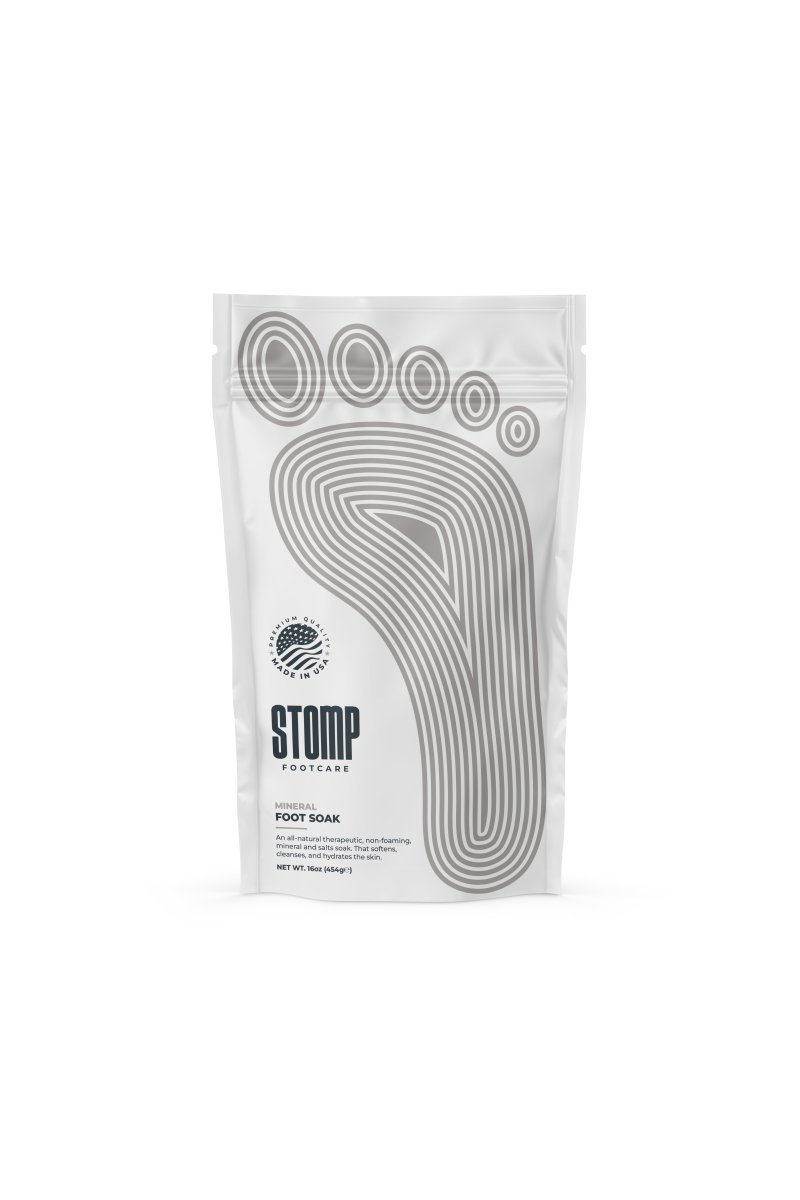
Try our Mineral Foot Soak ($14.99), which combines sea salt with peppermint and eucalyptus. The concentrated formula is designed to soften thickened skin while creating a soothing experience. Just mix with warm water and soak.

After soaking, pat your feet dry. Don't rub hard. Your skin is now soft and ready for the next step.
Step 2: Gentle Exfoliation with Pumice Stone for Calluses
Now gently remove the dead skin. A pumice stone is your best tool here. It's abrasive enough to work but won't damage healthy skin if you use it correctly.
Wet your pumice stone and rub it gently over the callus in circular motions. Use light pressure. You're not trying to remove the entire callus in one session. Gentle, repeated treatment works better than aggressive scrubbing.
Spend 30-60 seconds on each callus. Stop if your skin starts to feel sore or raw. You can always come back tomorrow. One of the biggest mistakes people make is overdoing it in the first treatment.
Consider our Revitalizing Foot Scrub ($9.99) instead of a dry pumice stone. It's a gentle pumice scrub enriched with aloe vera and vitamins. You apply it to wet skin and massage gently.
Step 3: Apply Specialized Callus-Removal Treatment
After exfoliation, your skin is open and ready to absorb treatment. This is when a specialized callus remover makes a real difference.
Our Intensive Callus Remover ($9.99) is formulated with salicylic acid and urea. Salicylic acid helps break down the buildup of dead skin cells. Urea hydrates while working. The formula is non-greasy and absorbs quickly, so it won't leave your feet slippery.
Apply it directly to the callus and any dry patches. Let it absorb for a few minutes. Don't wash it off immediately. The longer it stays on, the more it works.
Use this treatment 2-3 times per week for best results. Consistency matters more than intensity.
Step 4: Moisturize to Lock in Hydration
This is the step people skip, and it's why their calluses come back. After you've softened and treated the callus, you need to lock in moisture.
Apply a rich foot cream while your skin is still slightly damp. Moisture seals in better when skin is hydrated. Our Hydrating Foot Cream ($9.99) is specifically designed for feet. It contains jojoba oil, aloe vera, vitamin B5, and urea, ingredients that restore hydration without leaving a greasy residue.
Massage the cream into your entire foot, paying special attention to heels and the ball of your foot where calluses form. Let it absorb for a few minutes before putting on socks.
The moisturizing step is non-negotiable. It prevents the callus from returning and keeps your skin soft and flexible.
How to Use a Pumice Stone for Calluses: How to Use Correctly
A pumice stone is a simple tool, but using it wrong causes problems. Here's exactly how to use one safely.
Choose the right pumice stone. Natural pumice is gentler than synthetic versions. Look for one with a fine grit, not coarse.
Soak first, always. Never use a pumice stone on dry feet. Dry skin is more fragile and tears easily.
Use light pressure. This is the biggest mistake. People press hard thinking it will remove the callus faster. It won't.
Don't overdo it. Spend 30-60 seconds per callus. If your skin turns red or feels raw, stop. You can treat again tomorrow.
Moisturize immediately after. Your skin is now open and vulnerable. Apply cream right after drying your feet. This prevents irritation and keeps skin hydrated.
A pumice stone for calluses works best when used 2-3 times per week. Daily use can damage your skin.
Best Moisturizer for Dry Feet and Calluses: Ingredients That Work
Not all foot creams are equal. The best moisturizer for dry feet and calluses contains specific ingredients that actually work.
Urea is a powerhouse ingredient. It draws moisture into your skin and helps break down buildup.
Jojoba oil mimics your skin's natural oils. It absorbs quickly without leaving a greasy feeling. It's especially good for people with sensitive skin.
Aloe vera soothes irritation and hydrates. It's gentle and works well on compromised skin.
Vitamin B5 (panthenol) strengthens your skin barrier. It helps your skin retain moisture longer. (Source: National Institutes of Health)
Salicylic acid (in treatment products, not daily creams) helps dissolve the buildup of dead skin cells.
Our Hydrating Foot Cream contains jojoba oil, aloe vera, vitamin B5, and urea. It's designed specifically for the unique needs of feet.

Apply foot cream every night, especially after treating calluses.
Preventing Calluses and Dry Skin: What Causes Them in the First Place
Prevention is easier than treatment. Understanding what causes calluses and dry skin helps you stop them before they start.
Pressure and friction are the main culprits. If your shoes rub in the same spot repeatedly, your skin thickens to protect itself.
Poor footwear is a major factor. Shoes that don't fit properly create friction. Shoes without enough support force your foot to work harder, creating pressure points.
Dry climate or dehydration makes your skin more vulnerable. If you're not drinking enough water, your skin can't retain moisture.
Repetitive activity without recovery causes buildup. Your feet need rest and care, especially if you're active. Runners should take rest days.
Neglect is the silent cause. If you don't moisturize regularly, your skin gets drier.
To prevent calluses and dry skin:
- Wear shoes that fit properly and provide support
- Replace worn-out shoes before they cause problems
- Moisturize your feet daily, especially at night
- Take rest days if you're an athlete
- Stay hydrated
- Address small calluses before they become big problems
Prevention doesn't require expensive products. It requires consistency. A simple routine of daily moisturizing and proper footwear prevents most calluses from forming.
When to See a Doctor for Foot Calluses: Red Flags and Care-Seeking Timelines
Most calluses respond well to home treatment. But some situations require professional care.
See a doctor if:
- The callus is painful or bleeding
- You have signs of infection (redness, warmth, pus, swelling)
- The callus doesn't improve after 4 weeks of consistent home treatment
- You have diabetes or poor circulation (these conditions make foot problems serious)
- You have reduced sensation in your feet (you might not feel damage)
- The callus is interfering with your ability to walk or exercise
Special consideration for diabetes: If you have diabetes, don't treat calluses at home without professional guidance. Diabetes reduces sensation, so you might damage your skin without realizing it.
Special consideration for poor circulation: Poor blood flow means wounds heal slowly. Even minor skin damage can become infected. See a professional if you have circulation problems.
Special consideration for reduced sensation: If you can't feel pain in your feet, home treatment is risky. You might injure yourself without knowing it. Professional care is safer.
For most people without these risk factors, 2-4 weeks of consistent home treatment shows results. If you're not seeing improvement by week 4, see a podiatrist.
A podiatrist can also identify whether you have a callus, a corn (which is different and requires different treatment), a wart, or another skin condition.
Common Mistakes to Avoid When Treating Calluses and Dry Skin
People make predictable mistakes when treating calluses and dry skin. Avoid these and you'll see better results.
Mistake 1: Using a razor or blade. This is dangerous.
Mistake 2: Treating too aggressively. Scrubbing hard or treating daily damages your skin. Gentle, consistent care works better.
Mistake 3: Skipping moisturizer. This is why calluses come back.
Mistake 4: Using the wrong products. Regular body lotion isn't thick enough for feet.
Mistake 6: Treating in isolation. A callus and dry skin are connected. You need to address both.
Mistake 7: Expecting overnight results. Calluses form over weeks or months. They take time to soften and disappear.
Mistake |
Why It Happens |
Better Approach |
|---|---|---|
Aggressive scrubbing |
Wanting fast results |
Gentle, consistent treatment over weeks |
Skipping moisturizer |
Thinking treatment is enough |
Moisturize every night after treatment |
Using wrong products |
Grabbing what's available |
Use foot-specific creams with urea and oils |
Treating daily |
Thinking more is better |
Treat 2-3 times per week maximum |
Ignoring footwear |
Focusing only on the callus |
Fix the shoes causing the problem |
Not soaking first |
Jumping straight to scrubbing |
Always soak 10-15 minutes before treating |
Treating calluses and dry skin safely is a process, not a quick fix.
At Stomp Footcare, we've built our product line around this exact approach. Our Revitalizing Foot Scrub exfoliates gently.

Frequently Asked Questions
How can I soften a callus without cutting or scraping it aggressively?
Soak your feet in warm water for 10-15 minutes to soften hardened skin, then gently exfoliate with a pumice stone using light circular motions. Avoid aggressive scraping, which can cause bleeding and infection. Follow with a specialized callus-removal treatment containing salicylic acid and urea, then moisturize. Repeat 2-3 times per week. For stubborn calluses, the Intensive Callus Remover works by gradually softening dead skin cells without requiring harsh scraping.
What ingredients should I look for in a moisturizer for dry feet and calluses?
Choose moisturizers containing urea, jojoba oil, aloe vera, and vitamin B5. Urea hydrates and softens thickened skin, while jojoba oil and aloe vera provide deep moisture and soothe irritation. Vitamin B5 supports skin healing. The Hydrating Foot Cream combines these ingredients in a non-greasy formula that absorbs quickly and prevents moisture loss while relieving cracked, dry skin.
How often should I use a pumice stone on foot calluses, and when should I stop?
Use a pumice stone 2-3 times per week on callused areas. Stop immediately if you notice redness, bleeding, or raw skin—this signals you've removed too much skin. Each session should last only 1-2 minutes per foot. The Revitalizing Foot Scrub offers a gentler alternative with natural pumice granules, aloe vera, and vitamins that exfoliate without aggressive scraping while promoting new cell growth.
When should I see a doctor about calluses or dry skin on my feet?
Seek professional care if calluses become painful, bleed, show signs of infection (warmth, swelling, pus), or don't improve after 2-3 weeks of home treatment. If you have diabetes, poor circulation, or reduced sensation in your feet, consult a healthcare provider before treating calluses at home. Also see a doctor if you cannot distinguish between a callus, corn, wart, or other skin growth.
