

Table of Contents
- Why Your Feet Hurt After Standing (and What Makes It Worse)
- Step 1: Choose the Best Shoes for Standing All Day
- Step 2: Use Stretches for Foot Pain Relief Every Few Hours
- Step 3: Set Up an Ergonomic Standing Station
- Step 4: Build a Nighttime Recovery Routine for Foot Pain from Standing
- Step 5: Know When to See a Podiatrist for Foot Pain
- Frequently Asked Questions
Last Updated: September 14, 2026
Why Your Feet Hurt After Standing (and What Makes It Worse)
To stop foot pain from standing, understand what's happening in your feet. Foot pain from standing results from sustained load on soft tissues never designed to bear weight without movement. When you stand still, your plantar fascia stays stretched under constant tension instead of cycling through the load-and-release pattern of walking. Blood pools in the lower legs, inflammation builds, and small foot muscles fatigue without recovery.
This guide from Stomp Footcare walks through seven proven steps, from footwear selection to nighttime recovery, so you can stay on your feet without paying for it later.
Most advice treats standing pain as a shoe problem alone. In practice, footwear is one variable among several: surface hardness, static posture, calf tightness, and overnight recovery all compound the same problem. Fix one and you'll see modest relief; fix all and the difference is dramatic.
Three things reliably make foot pain from standing worse:
- Hard, unyielding floors. Concrete and tile reflect impact straight back into your arches with no absorption.
- Locked, static posture. Standing in one spot with your knees locked restricts blood circulation and concentrates pressure on the same small area for hours.
- Ignoring the warning signs. Aching that you push through today becomes heel pain and tendonitis that sidelines you next month.
According to MedlinePlus on foot health and pain, most foot pain in adults stems from mechanical causes, meaning the way you load and support your feet, rather than disease. The CDC's guidance on physical activity and workplace health also notes that prolonged standing is a recognized occupational risk factor for lower-limb discomfort. That framing matters: this is largely mechanical, which means it's largely fixable.
Step 1: Choose the Best Shoes for Standing All Day
The best shoes for standing all day share three traits: cushioning that absorbs impact, a firm heel counter that stabilizes the foot, and a toe box roomy enough for toes to spread. A removable insole helps because it lets you swap in supportive insoles or orthotics without buying new footwear.
Match Footwear to Your Foot Type
Foot type changes which shoe works, and this is where generic advice falls apart. A common mistake is buying the same shoe a coworker swears by without checking your own arch. Here's how the three main foot types map to specific shoe features:
- Flat feet or low arches (overpronation): The arch collapses inward with each step, which overstretches the plantar fascia and pulls the heel. Look for motion control or stability shoes with a firm medial post and a dense midsole. A shoe that's too soft lets the arch collapse further. Avoid heavily cushioned "max" shoes with no structure.
- High arches (underpronation): A rigid, high arch absorbs less shock on its own, so impact travels straight up the leg. Prioritize cushioning in the midsole and heel, and look for a neutral shoe with a flexible forefoot. Motion control shoes will feel punishing here.
- Neutral feet: Most stability or neutral trainers with supportive insoles will work. You have the widest range of options, so fit and comfort should drive the decision.
- Plantar fasciitis: Heel pain that's worst with the first steps of the morning points to the plantar fascia. A shoe with a slightly elevated heel (a small drop) and a firm, contoured arch support reduces tension on the fascia. A fully flat, flexible shoe tends to make morning pain worse.
Rotation, Fit, and Break-In
Footwear rotation helps: alternating two pairs gives the foam midsole 24 hours to rebound and changes daily pressure points. A midsole that stays compressed loses most of its shock absorption, which is why a shoe that felt great at month one can feel flat by month six.
Replace standing shoes every 300 to 500 miles of walking, or roughly every six months of full-time standing work, whichever comes first (aofas.org). Watch for a midsole that no longer springs back when you press it, or a heel counter that has softened and lets your foot roll inward.
When Insoles Beat New Shoes
If your shoes are structurally sound but the factory insole is thin foam, a replacement insole is often cheaper than new footwear. Over-the-counter insoles with a firm arch and cupped heel work well for mild flat feet and general fatigue. Custom orthotics, fitted by a podiatrist after gait analysis, are better for significant structural issues, diabetes-related foot changes, or pain that hasn't responded to off-the-shelf support.
A practical test: pull the factory insole out and stand on it. If your arch hangs over the edge, the shoe isn't supporting you, and no amount of cushioning will fix that.
Step 2: Use Stretches for Foot Pain Relief Every Few Hours
The most effective stretches for foot pain relief target the calf and sole, and work best every two to three hours rather than once a day. Tight calves pull on the plantar fascia through the Achilles tendon, so loosening the calf often relieves heel pain that seems to come from nowhere.
Towel Stretch, Calf Stretch, and Frozen Bottle Roll
Three moves cover most of the ground:
- Towel stretch. Sit with one leg extended, loop a towel around the ball of your foot, and gently pull your toes toward you. Hold 30 seconds per foot. This targets the plantar fascia directly.
- Calf stretch. Stand facing a wall, hands on it, one leg back with the heel flat on the floor. Lean forward until you feel the stretch in the back leg. Hold 30 seconds, then switch.
- Frozen water bottle roll. Roll a frozen bottle under your arch for a few minutes. This combines cold therapy with myofascial release, easing inflammation while you work the tissue.
If you have a foam roller, spending a minute on each calf before the stretches makes them more effective. For a deeper release, a therapeutic massage of the arch and calf in the evening keeps the tissue from tightening back up overnight.
Step 3: Set Up an Ergonomic Standing Station
Ergonomic workplace modifications are the step most guides skip, and often the difference between manageable and miserable. Anti-fatigue mats are the highest-value change: they cushion impact and encourage small, constant shifts in your stance that keep blood circulation moving.
Beyond the mat:
- Use a footrest or a small rail. Propping one foot up alternately shifts load off your lower back and arches.
- Adjust your work surface height. If you're stooping or reaching, your posture degrades and pressure redistributes badly through your feet.
- Pair standing with movement. A standing desk works best when you alternate sitting and standing rather than standing all day. Frequent breaks, even 30 seconds of walking every half hour, reset the load on your feet.
A common mistake is buying a mat and then standing rigidly on it for eight hours straight. The mat helps; the stillness doesn't. Change position often, shift your weight deliberately, and take the micro-breaks.
Step 4: Build a Nighttime Recovery Routine for Foot Pain from Standing
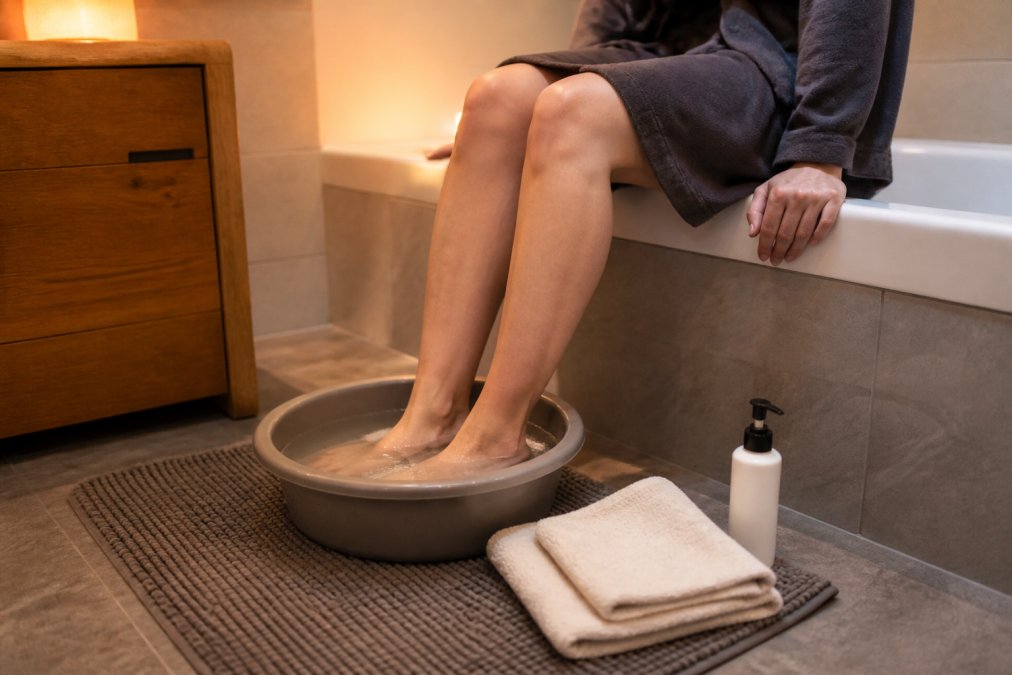
A nighttime recovery routine for foot pain from standing does more for next-day comfort than almost anything you do during the workday. The goal is to reduce swelling, restore circulation, and let tissue repair while you sleep. Most guides stop at "soak your feet," but the hour before bed is when you can actually change how your feet feel at 7 a.m., the first-steps pain plantar fasciitis sufferers know best.
The Pre-Sleep Sequence
Order matters. Work from circulation to release to rest:
- Soak for 10 to 15 minutes. An Epsom salt soak is the classic starting point. A Mineral Foot Soak with sea salt, peppermint, and eucalyptus does double duty: the warm water eases muscle fatigue, while the peppermint delivers a cooling sensation that calms tired, aching feet. Keep it to 15 minutes, longer soaks can dry the skin and, with very hot water, increase swelling rather than reduce it. Warm water for stiffness, cool water for hot, puffy feet.
- Elevate above heart level for 10 to 15 minutes. A pillow stack under your ankles works fine. This is the step that actually drains the fluid that pooled in your feet and lower legs during the shift. Elevating below heart level does much less.
- Massage the arch and calf. Work from the calf down to the heel and along the arch. A cream like Stomp Footcare's Energizing Foot Cream cools, softens, and deodorizes while you work it into the arch and heel. Massage improves circulation and helps the tissue release. Spend at least a minute on each calf; tight calves pull on the plantar fascia through the Achilles tendon overnight.
- Stretch before you get into bed. The towel stretch from Step 2, done right before sleep, keeps the plantar fascia from tightening into a shortened position overnight. This is the single most useful pre-sleep move for morning heel pain.
- Finish with a warm compress if your feet feel stiff rather than swollen, or cold therapy if they're hot and puffy.
Why the Overnight Window Matters
When you sleep, your feet unload for the first time all day. That's when inflammation settles and tissue repairs, but also when the plantar fascia and calf can tighten into a shortened position, which is why the first steps out of bed are often the worst pain of the day. A pre-sleep stretch plus elevation directly targets that morning spike.

A few more habits that compound the effect:
- Keep a pair of supportive shoes or firm slippers by the bed. Walking barefoot on a hard floor first thing in the morning loads a cold, tight plantar fascia. Supportive footwear for those first steps reduces the morning jolt.
- Sleep with feet slightly elevated if you swell badly. A pillow under the ankles, not under the knees, keeps the drainage path open.
- Skip the late-night salty meal and alcohol. Both increase fluid retention, which shows up as puffier feet by morning.
- Hydrate during the day, not right before bed. Good hydration supports circulation; a large glass at 10 p.m. just interrupts your sleep.
Consistency matters more than intensity here. Ten minutes every night beats an hour once a week. If you only have time for one thing, make it the pre-sleep stretch, it's the highest-return minute in the whole routine.
Step 5: Know When to See a Podiatrist for Foot Pain
See a podiatrist when pain persists beyond a couple of weeks of home care, wakes you at night, comes with numbness or tingling, or shows up with swelling that doesn't improve with elevation. Those signs need a proper diagnosis and possibly imaging, not more stretching.
A podiatrist can run a gait analysis, assess your biomechanics, and fit orthotics or arch support tailored to your feet. Persistent heel pain that doesn't respond to rest and stretching sometimes turns out to be plantar fasciitis needing targeted treatment, or nerve involvement that mimics it.
The honest limitation of self-care: it works well for mechanical fatigue and mild inflammation, and poorly for structural problems, nerve compression, or diabetes-related foot issues. If you manage a chronic condition, get professional input before building a routine around trial and error.
Home care handles most standing-related foot pain. The exceptions, pain that persists past two weeks, numbness, night pain, or swelling that won't settle, are your signal to book a podiatrist rather than push through.
Standing all day shouldn't mean ending every shift with throbbing feet. The fix is rarely one thing: it's the right footwear, regular stretches, an ergonomic setup, and a recovery routine you actually keep. Stomp Footcare makes the recovery half easier with cruelty-free, PETA-certified, Made in USA foot care, including the Energizing Foot Cream that cools and revives tired feet and the Mineral Foot Soak that turns ten minutes in the evening into real relief. Get started with Stomp Footcare and give your feet the recovery they've earned.

Frequently Asked Questions
Why do my feet hurt when I stand but not when I walk?
Standing keeps the same muscles, tendons and fascia under constant load, so blood circulation slows and inflammation builds in one spot. Walking pumps the calf muscles, which pushes blood back toward the heart and shifts pressure across the foot. That is why a static shift often hurts more than a moving one. Breaking up long standing periods with short walks, calf raises or a few steps every 20 to 30 minutes helps restore that pumping action and eases foot pain from standing.
Will my feet get used to standing all day?
Partly, but not completely. Muscles and soft tissue adapt to longer shifts over a few weeks, and the soreness often fades. The damage from repeated load, however, does not disappear on its own. Without supportive footwear, anti-fatigue mats and recovery habits like stretching and elevation, the same stress can lead to plantar fasciitis, metatarsalgia or tendonitis. Treat adaptation as a reason to build better habits, not as a reason to ignore the pain.
How long does it take to see relief from foot pain caused by standing?
Some steps work the same day. A 10-minute Epsom salt soak, a frozen water bottle roll or 15 minutes with your feet above heart level can calm swelling and soreness within an hour. Switching to supportive shoes, adding orthotics or insoles, and using anti-fatigue mats usually shows a clear difference within one to two weeks of daily wear. If pain continues past two weeks despite these changes, book a podiatrist for a gait analysis and exam.
What are the best stretches to relieve foot pain after work?
Start with a towel stretch: sit with one leg out, loop a towel around the ball of your foot and gently pull your toes toward you for 30 seconds, three times per side. Follow with a calf stretch against a wall, 30 seconds per leg, then roll your arch over a frozen water bottle for one to two minutes. These moves target the plantar fascia and calf, improve blood circulation and reduce morning heel pain.
