

Table of Contents
- 1. The R.I.C.E. Method: Foundation for Chronic Foot Care
- 2. Proper Footwear and Arch Support Selection
- 3. How to Relieve Foot Pain from Standing All Day
- 4. Home Remedies for Chronic Foot Pain
- 5. Specialized Foot Care Products for Daily Relief
- When to See a Doctor for Foot Pain
- Frequently Asked Questions
Last Updated: September 22, 2026
1. The R.I.C.E. Method: Foundation for Chronic Foot Care
The R.I.C.E. method, Rest, Ice, Compression, and Elevation, remains the foundational approach for managing chronic foot pain and inflammation. This proven strategy addresses the root causes of discomfort by reducing swelling, limiting movement that aggravates injury, and promoting circulation. At Stomp Footcare, we recognize that while this method alone doesn't solve every case of chronic foot soreness, it's the essential first step that makes everything else more effective.
The R.I.C.E. protocol works because it interrupts the inflammatory cycle that perpetuates foot pain. When you rest your feet, you prevent further microtrauma. Ice constricts blood vessels temporarily, reducing swelling. Compression applies gentle pressure that limits fluid accumulation in tissues. Elevation uses gravity to drain excess fluid away from the foot. Together, these four components create an environment where healing can actually happen.
Rest and Activity Modification
Rest doesn't mean complete immobility, it means intelligent activity modification. If standing all day triggers your foot pain, you need to reduce standing time strategically. Many people with occupational foot soreness find that breaking up long standing periods with 5-10 minute sitting breaks every hour makes a measurable difference in daily discomfort levels.
The key is recognizing which activities aggravate your specific pain pattern. Runners should reduce mileage before pain becomes severe. Office workers should alternate between sitting and standing rather than staying in one position for hours. This graduated approach prevents the cycle where pain worsens, you rest completely, and then returning to activity causes flare-ups again.
Ice, Compression, and Elevation
Ice application works best in 15-20 minute sessions, applied 3-4 times daily, especially after activities that trigger pain. Wrap ice in a thin cloth to avoid direct contact with skin. Many people find that icing before bed reduces morning stiffness and overnight inflammation.
Compression sleeves or wraps provide continuous support that reduces swelling throughout the day. The pressure helps stabilize foot structures and can be worn under regular footwear without discomfort. Elevation is straightforward but often overlooked: when sitting, prop your feet up on a cushion or ottoman so they're above heart level. This simple gravity-assisted drainage reduces fluid accumulation that contributes to chronic soreness.
2. Proper Footwear and Arch Support Selection
Your shoes are either working against your feet or working with them. Chronic foot soreness often stems from footwear that doesn't provide adequate arch support or that forces your foot into unnatural biomechanics. The wrong shoe choice compounds whatever underlying condition you have, whether that's plantar fasciitis, general overuse injury, or postural strain from standing work.
Look for shoes with built-in arch support that matches your foot's natural curve. Many people with chronic foot pain benefit from shoes with a slightly firmer midsole that resists excessive foot collapse. The toe box should be wide enough that your toes don't feel compressed, which can trigger nerve pain or create pressure points that become painful after hours of standing.
Replace athletic shoes every 300-500 miles, or roughly every 6 months if you're active. Worn-out cushioning stops supporting your arch and foot structure, forcing your muscles to work harder to stabilize your foot. This extra effort contributes directly to chronic soreness. Orthotics, custom or over-the-counter inserts, can improve foot biomechanics and reduce pain, especially if your natural arch is too high or too low for standard shoes.
3. How to Relieve Foot Pain from Standing All Day
Standing for extended periods creates cumulative stress on foot structures. Your feet support your entire body weight, and when that stress continues for 8, 10, or 12 hours, inflammation builds and pain develops. The solution combines immediate relief strategies with longer-term changes to how you stand and move.
Stretching and Therapeutic Exercise
Stretching addresses the tightness that develops from prolonged standing. Your calf muscles, plantar fascia, and foot muscles all tighten when you're on your feet constantly. Tight muscles reduce flexibility and increase strain on joints and connective tissue.
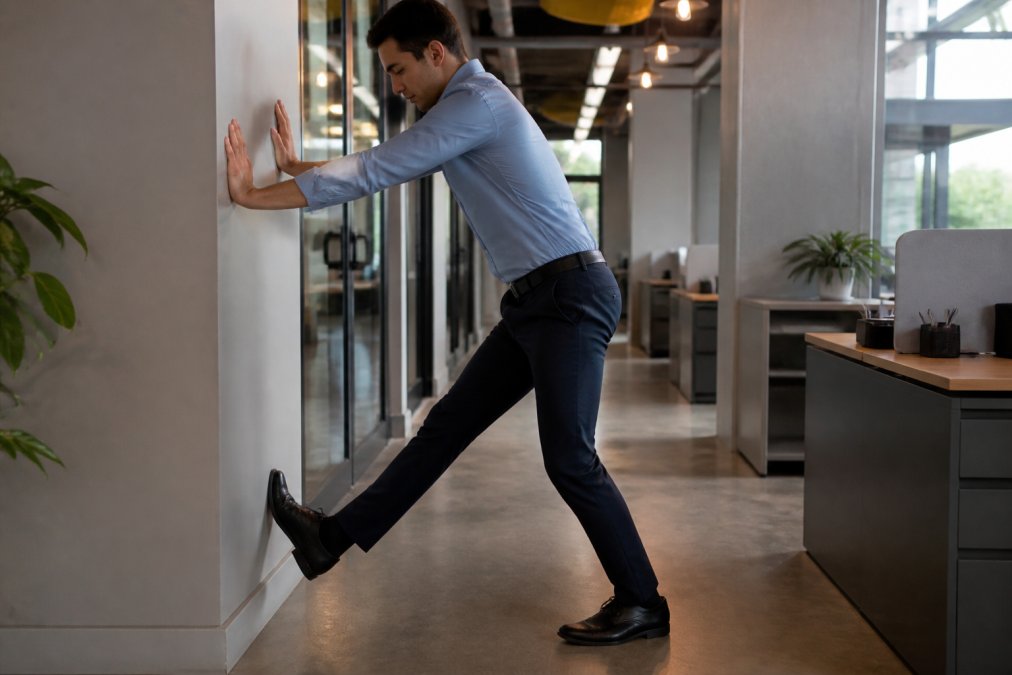
Simple stretches can be done throughout your workday. The calf stretch, placing your hands on a wall and stepping one leg back while keeping the heel on the ground, targets the muscle group that directly affects foot function. Hold for 30 seconds, repeat 3 times per leg, and do this 2-3 times daily.
The plantar fascia stretch involves pulling your toes back toward your shin while seated. This elongates the tissue that runs along the bottom of your foot. Many people with chronic foot soreness find this single stretch reduces morning stiffness and pain during the day.
Foot exercises that strengthen intrinsic foot muscles, the small muscles within the foot itself, improve stability and reduce compensatory strain. Toe curls, where you curl your toes as if trying to grip a towel on the floor, strengthen these stabilizer muscles. Do 10-15 repetitions daily.
Foot Massage and Pressure Point Relief
Massage increases blood flow to tired foot muscles and helps release tension that accumulates from standing. Using your hands or a massage ball, apply moderate pressure to the arch of your foot using circular motions. Spend 2-3 minutes on each foot, focusing on areas that feel tender or tight.
A tennis ball or lacrosse ball works well for self-massage. Roll the ball under your foot while seated, applying pressure to tender spots. This technique releases trigger points in the plantar fascia and foot muscles.
4. Home Remedies for Chronic Foot Pain
Home-based approaches complement professional treatments and provide relief you can access immediately. These methods address inflammation, promote circulation, and soothe the discomfort that comes with chronic foot soreness.
Mineral Soaks and Topical Treatments
Mineral soaks combine warm water with therapeutic ingredients that relax muscles and reduce inflammation. Stomp Footcare's Mineral Foot Soak blends Sea Salt, Tea Tree Oil, Peppermint, and Eucalyptus, ingredients chosen specifically for their ability to soothe tired feet while cleansing and refreshing the skin. A 15-20 minute soak after work or a long day of standing reduces swelling and prepares your feet for additional treatments.

Anti-Inflammatory Support and Pain Management
Over-the-counter pain relievers like ibuprofen reduce inflammation when used as directed. These nonsteroidal anti-inflammatory drugs (NSAIDs) work by limiting the body's inflammatory response, which is the actual source of chronic foot pain. Many people find that taking an NSAID before activities that typically trigger pain prevents the soreness from developing in the first place.
5. Specialized Foot Care Products for Daily Relief
Dedicated foot care products address chronic soreness more effectively than generic body products because they're formulated specifically for foot skin and the unique challenges feet face. Feet experience constant pressure, friction, and moisture, conditions that require targeted solutions.
| Product | Price | Best For | Key Benefit |
|---|---|---|---|
| Energizing Foot Cream | $11.99 | Daily relief & odor control | Rapid cooling with menthol |
| Mineral Foot Soak | $14.99 | Post-activity recovery | Therapeutic soak with essential oils |
| Soothing Lotion Foot Mask | $4.99 | Intensive hydration | Deep moisturizing treatment |
| Hydrating Foot Cream | $9.99 | Daily maintenance | Lightweight non-greasy formula |
| Revitalizing Foot Scrub | $9.99 | Exfoliation & renewal | Gentle pumice with conditioning |
When to See a Doctor for Foot Pain
Home care and over-the-counter treatments resolve many cases of chronic foot soreness, but some situations require professional evaluation. Podiatric assessment becomes necessary when pain persists despite consistent home treatment for 3-4 weeks, when swelling doesn't improve with elevation and compression, or when pain is severe enough to limit daily activities.
Frequently Asked Questions
How long does it take to see results from foot care treatment?
Results vary depending on the severity of chronic soreness and your approach. The R.I.C.E. method can help reduce acute inflammation. Stretching and strengthening routines can show improvement with consistent daily practice. Topical foot care products like creams and soaks provide immediate comfort, and can help with skin conditioning. Athletes and individuals on their feet 10+ hours daily often notice relief when combining multiple methods like proper footwear, daily stretching, and foot massage.
What are the best home remedies for chronic foot pain?
Effective home remedies for chronic foot pain include mineral foot soaks with sea salt and essential oils, which reduce inflammation and soften skin; regular stretching to improve joint mobility and reduce tension; foot massage targeting pressure points to improve circulation; and topical creams containing menthol and urea for cooling relief and skin conditioning. Elevation and ice application address swelling, while maintaining a healthy weight reduces pressure on feet. Combining these approaches, such as a 15-minute soak followed by stretching and foot cream application, creates a comprehensive routine that addresses pain, inflammation, and skin health simultaneously.
When should I see a podiatric professional for chronic foot soreness?
Seek professional evaluation if chronic foot pain persists despite home care, worsens suddenly, or is accompanied by swelling, redness, or signs of infection. See a podiatrist if you suspect overuse injury, plantar fasciitis, arthritis, tendonitis, or gait-related problems affecting your biomechanics. Individuals with conditions like gout or diabetes should have regular podiatric monitoring. If pain prevents you from standing or walking normally, or if home remedies aren't providing relief after consistent use over 3-4 weeks, professional assessment can identify underlying musculoskeletal issues and recommend orthotics or specialized treatment.
Are there specific exercises to reduce chronic foot soreness?
Yes. Therapeutic stretching targets the plantar fascia and calf muscles, perform calf stretches against a wall for 30 seconds, 2-3 times daily. Toe flexion exercises, where you curl and spread your toes repeatedly, improve joint mobility. Foot rolls using a tennis ball or foam roller increase circulation and release pressure points. Resistance band exercises strengthen arch support muscles. Heel-to-toe walking improves gait and reduces biomechanical stress. Start with 10-15 minutes daily and gradually increase. These exercises work best when combined with proper footwear, rest days, and foot care products that support recovery and reduce inflammation.
