

Table of Contents
- Why Runners Need a Professional Foot Care Routine
- Daily Foot Care Steps for Runners
- Foot Care Before and After Running
- Runner Toenail Care and Maintenance
- How to Prevent Blisters When Running
- Weekly and Race-Day Foot Care
- When to Seek Professional Help for Foot Issues
- Frequently Asked Questions
Last Updated: October 20, 2026
Why Runners Need a Professional Foot Care Routine
Your feet absorb impact, manage moisture, and bear the weight of every stride. Yet most runners treat foot care as an afterthought, addressing it only when pain forces the issue. (Source: the Centers for Disease Control and Prevention (CDC))
A professional foot care routine for runners isn't luxury, it's maintenance. Just as you wouldn't run in worn-out shoes, your feet need consistent attention.
High-impact training creates friction, moisture buildup, and pressure points.
Runners who stay healthy catch problems early. This guide from Stomp Footcare covers the steps to build that routine, from daily care to race-day prep.
Daily Foot Care Steps for Runners
Your feet work best when you check them regularly and keep them clean and dry.
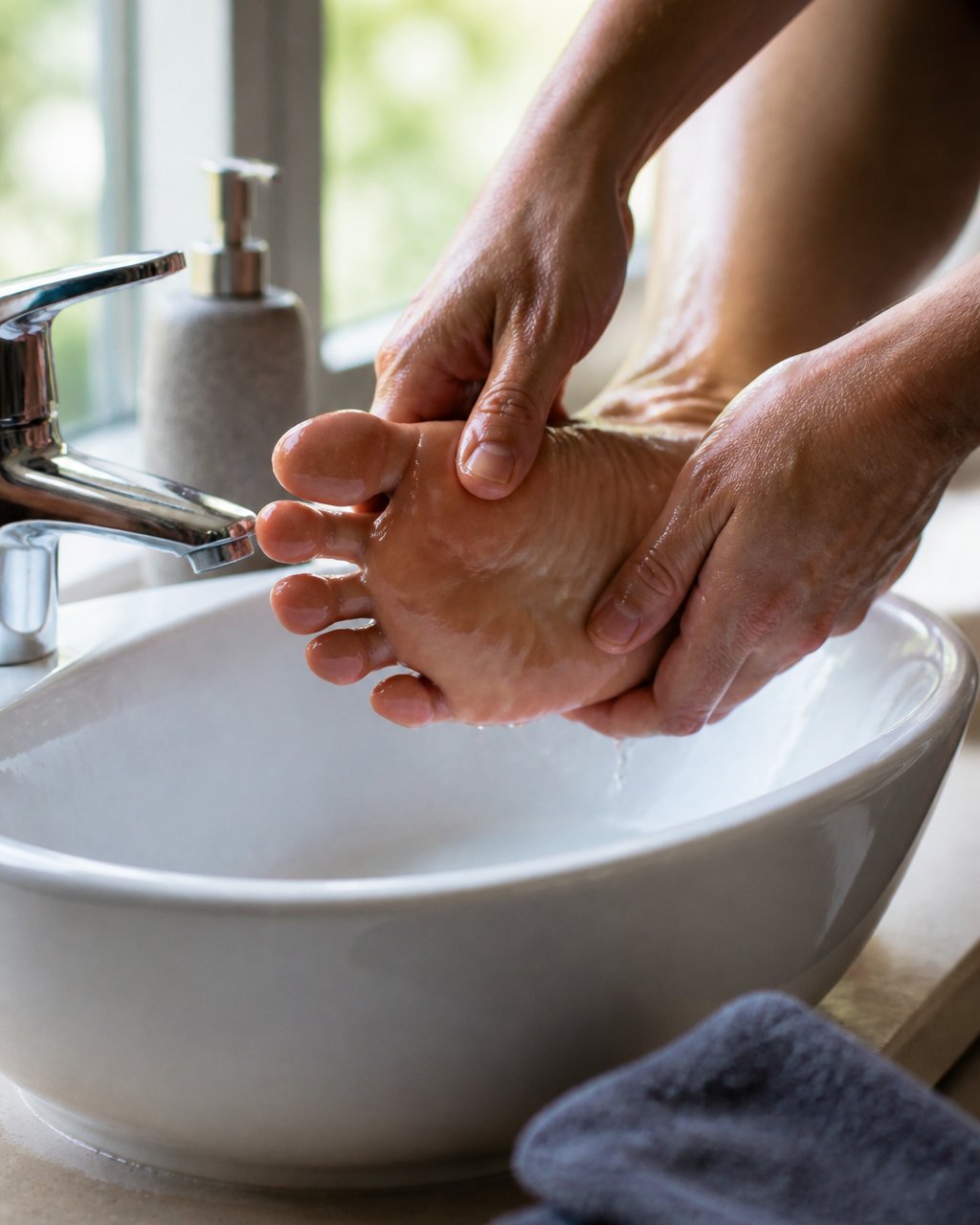
Morning foot inspection and cleaning
Start each day by inspecting your feet for new blisters, hot spots, cracks, or redness.
Wash with cool water and mild soap, then dry completely, especially between the toes, trapped moisture invites fungal infections (the CDC).
Trim toenails short and straight across; long nails catch on socks and create friction. Thick or discolored nails signal running stress and need extra care.
Evening foot care and recovery
After running, remove your shoes and socks immediately and let your feet breathe, trapped sweat creates blisters and fungal problems.
Wash again to remove dirt, sweat, and bacteria, then dry thoroughly.
Apply a runner-specific foot cream. The Energizing Foot Cream from Stomp Footcare cools tired feet while softening skin and eliminating odor.

Check for new hot spots or blisters and treat them immediately.
Foot Care Before and After Running
What you do before and after your run shapes foot health more than anything else.
Pre-run preparation
Start with moisture-wicking socks. Cotton holds sweat against your skin; choose synthetic blends or merino wool instead.
Check shoe fit: leave one thumb's width between your longest toe and the end of the shoe.
Inspect your feet once more for new hot spots or irritation, and address anything you find before running.
Apply anti-chafing balm to past friction spots, the heel, ball of the foot, and between toes, to prevent blisters during the run.
Post-run recovery protocol
The first 30 minutes after running are critical. Remove your shoes and socks immediately. Dry your feet completely.
Ice your feet for ten minutes after hard or long runs to reduce inflammation and swelling, especially after races or high-mileage weeks.
Inspect for new blisters or hot spots.
Apply moisturizer to prevent dryness. The Hydrating Foot Cream from Stomp Footcare locks in moisture while protecting and nourishing skin, absorbing quickly without a greasy feel.

Change into clean, dry socks, damp socks invite fungal infections.
Runner Toenail Care and Maintenance
Toenail problems are common in runners: impact thickens nails and creates pressure under the nail bed.
Trim toenails short and straight across, perpendicular to the nail bed.
Use a nail file to smooth rough edges after trimming.
Watch for thick, discolored, or crumbly nails, signs of fungal infection or impact damage.
Keep toenails dry. Moisture under the nail promotes fungal growth.
How to Prevent Blisters When Running
Blisters end runs and derail training plans. Prevention is far easier than treatment.
Blisters form from friction and moisture. Reduce either one, and you prevent blisters.
Wear moisture-wicking socks. This is the single most important step. Wet feet blister.
Make sure your shoes fit properly.
Apply anti-chafing balm or use blister prevention tape on high-friction areas before you run.
Identifying and managing hot spots early
A hot spot is the first stage of a blister. Your skin feels warm, tender, and slightly inflamed.
Catch hot spots during your run if you can. Stop and check your feet.
After your run, cool the area with ice for 10 minutes.
Most hot spots resolve within 24 hours if you catch them early.
Blister care and treatment steps
If a blister forms, keep it clean and protected. Don't pop it.
Clean the area gently with soap and water. Dry it completely.
Cover the blister with a blister bandage or moleskin.
If the blister is painful or interferes with running, you can drain it carefully.
Keep the area dry. Moisture slows healing and increases infection risk.
Weekly and Race-Day Foot Care
Daily care prevents most problems. Weekly deep care and a structured race-week plan address the rest. The key is sequencing: what you do, and when, matters as much as what you use. Below is a practical schedule you can follow rather than a list of tips to remember.
The weekly deep-care session (pick one rest day)
Set aside 30 minutes once a week, ideally on a rest day so your feet aren't already inflamed.
- Soak (10-15 minutes). Use lukewarm water, not hot. Hot water swells tissue and can worsen inflammation from the week's training. Add nothing harsh, plain water is enough for most runners.
- Exfoliate gently. Use a pumice stone or foot file on callused areas, heels, the ball of the foot, the sides of the big toe. File in one direction with light pressure. You are smoothing rough skin, not removing the callus. Calluses are protective; removing them entirely invites blisters and soreness.
- Treat nails. Trim straight across, then file edges smooth. Check for thickening, discoloration, or separation from the nail bed, signs of impact damage or fungal involvement.
- Moisturize and seal. Apply a urea-based or ceramide-rich foot cream while skin is still slightly damp, then dry completely between the toes. Moisture between toes is the enemy; moisture on heels and calluses is the goal.
- Inspect and log. Note any new hot spots, cracks, or nail changes. A simple phone note, date, location, what it looked like, makes it far easier to spot a pattern (same blister every long run usually means a fit problem, not bad luck).
Race week: a day-by-day sequence
Race week is not the time for new products, new socks, or aggressive callus removal. The goal is to arrive at the start line with skin and nails in their normal, trained state.
- 7-5 days out: Do your normal weekly deep-care session, but stop short of aggressive filing. Trim nails if needed, never the day before a race.
- 4-2 days out: Keep daily washing and drying. Apply anti-chafing balm to known friction spots on training runs to confirm it behaves the way you expect.
- Day before: Soak feet in cool water for 10 minutes, moisturize, and let it absorb fully. Lay out the exact socks and shoes you trained in. Do not trim nails or file calluses the night before, micro-abrasions need a day to settle.
Adapt the routine to your runner profile
The same schedule does not fit everyone. Adjust the frequency and intensity of care to your training load and health status.
- New runners (under 15 miles a week): Daily wash-and-dry plus a weekly deep-care session is enough. Focus on shoe fit and sock choice first, most early problems are gear problems.
- High-mileage runners (40+ miles a week): Inspect feet daily, not just weekly. Add a mid-week mini-session (soak, dry, moisturize) and replace socks more often than you think, moisture-wicking fabric loses performance as it wears.
- Marathoners in peak block: Prioritize nail care and hot-spot management. Long runs are where blisters and black toenails appear; treat hot spots the same day rather than waiting for the weekly session.
When to Seek Professional Help for Foot Issues
Most foot problems respond to basic care within days. The skill is knowing which ones won't, and acting before a small issue becomes a training-stopping one. Use the red flags below as a triage guide, not a diagnosis.
Red flags that warrant prompt evaluation
See a podiatrist or other qualified clinician promptly if you notice any of the following:
- Signs of infection: spreading redness, warmth, pus, red streaks, or fever accompanying a blister, cut, or ingrown nail. These are urgent, do not wait for a scheduled appointment.
- Pain that worsens over days rather than improving with rest, ice, and reduced mileage.
- Sharp, localized pain in a specific bone (especially the top of the foot or the heel) that hurts with weight-bearing, a possible stress injury that needs imaging, not more running.
What to expect at an evaluation
A foot evaluation is usually straightforward. A clinician will ask about your training volume, shoe and sock choices, and when symptoms appear. They may examine your gait, check nail and skin health, and, if a stress injury is suspected, order imaging. Bring your running shoes and the socks you train in; wear patterns on the shoe can reveal a lot about fit and mechanics.
Self-care limits: what not to do
Some problems get worse with home treatment. Do not cut into a callus or ingrown nail yourself, do not use over-the-counter corn-removal acids on broken skin, and do not drain a blister that shows signs of infection. If you have diabetes, do not self-treat any wound, even a small one.
Build escalation into your routine
The best time to decide when to seek help is before you need it. Add a simple rule to your weekly session: if a problem hasn't improved after 7-10 days of consistent care, or if it meets any red flag above, book an evaluation.
A professional foot care routine for runners handles the everyday. Knowing when to hand off to a professional handles the rest.
Frequently Asked Questions
What should a runner's foot care routine include before and after a run?
Before running, clean your feet, inspect for hot spots or existing issues, trim toenails properly, and apply moisture-wicking socks with well-fitting shoes. After running, soak your feet in cool water for 10–15 minutes, dry thoroughly, apply a foot cream like Stomp Footcare's Hydrating Foot Cream ($13.99) to prevent dryness, and elevate your feet for 15 minutes to reduce swelling. This routine prevents blisters, fungal infections, and calluses while supporting recovery.
How can runners prevent blisters and hot spots?
Prevent blisters by wearing moisture-wicking running socks, choosing shoes with adequate toe room, and keeping feet dry during runs. Address hot spots immediately: stop, clean the area, apply an anti-chafing balm, and cover with a blister patch if needed. Daily foot hygiene, proper nail trimming, and applying Stomp Footcare's Lotion to Powder Deodorizer ($13.99) reduce friction and moisture buildup. Rotate shoes and avoid new gear on race day.
How often should runners trim their toenails, and what's the proper technique?
Trim toenails every 2–3 weeks. Trim straight across, not curved, and file the edges smooth to prevent snagging on socks. If nails thicken, discolor, or cause pain, see a podiatrist, as these may signal fungal infection or other issues needing professional care.
What products help maintain foot health for runners?
Stomp Footcare offers several products designed for runner foot care: Hydrating Foot Cream ($13.99) locks in moisture and prevents dryness; Energizing Foot Cream ($13.99) cools tired feet and eliminates odor; Revitalizing Foot Scrub ($13.99) gently exfoliates calluses and rough skin; and Lotion to Powder Deodorizer ($13.99) absorbs moisture and prevents chafing. All are made in the USA and PETA certified. Use these daily as part of your routine to prevent common runner foot issues.
Foot health determines whether you stay running or spend weeks on the sidelines. A consistent professional foot care routine catches problems before they become injuries. At Stomp Footcare, we've designed our products to support every stage of your routine, from daily moisturizing with our Hydrating Foot Cream to race-day moisture control with our Lotion to Powder Deodorizer. Get started with Stomp Footcare and keep your feet healthy, comfortable, and ready for every mile.
