

Table of Contents
- Why Professional Foot Care Matters for Your Spa Business
- Understanding the Pedicure Service Stages and Treatment Process
- Professional Foot Care Products for Spas: Selection and Application
- How to Disinfect a Foot Spa: Hygiene and Safety Protocols
- Foot Spa Treatment Menu Ideas and Service Offerings
- Spa Pedicure Service Pricing: Building Profitability
- Staff Training and Scope of Practice
- Frequently Asked Questions
Last Updated: October 7, 2026
Why Professional Foot Care Matters for Your Spa Business
Professional foot care for spa owners isn't just about offering another service, it's about building a revenue stream that clients return for repeatedly. Feet endure constant stress, and most people neglect them until problems develop. That's where your spa becomes essential. (Source: 2026 industry report on spa services)
At Stomp Footcare, we understand that professional foot care sits at the intersection of wellness and business. Clients who receive quality pedicure treatments report higher satisfaction than those receiving basic nail services alone. They're also more likely to book follow-up appointments and recommend your spa to others.
The difference between a standard pedicure and professional foot care comes down to depth. Standard services focus on aesthetics. Professional foot care addresses the underlying health of the skin, addresses calluses, and creates a therapeutic experience that clients feel in their daily lives.
Building a professional foot care program requires understanding the treatment stages, selecting the right products, maintaining strict hygiene protocols, and training your staff to recognize when a client needs referral to a medical professional. This guide covers all of it.
Understanding the Pedicure Service Stages and Treatment Process
Professional foot care for spa owners follows a structured sequence that maximizes results and client comfort. Each stage builds on the previous one, and skipping or rushing any step reduces effectiveness.
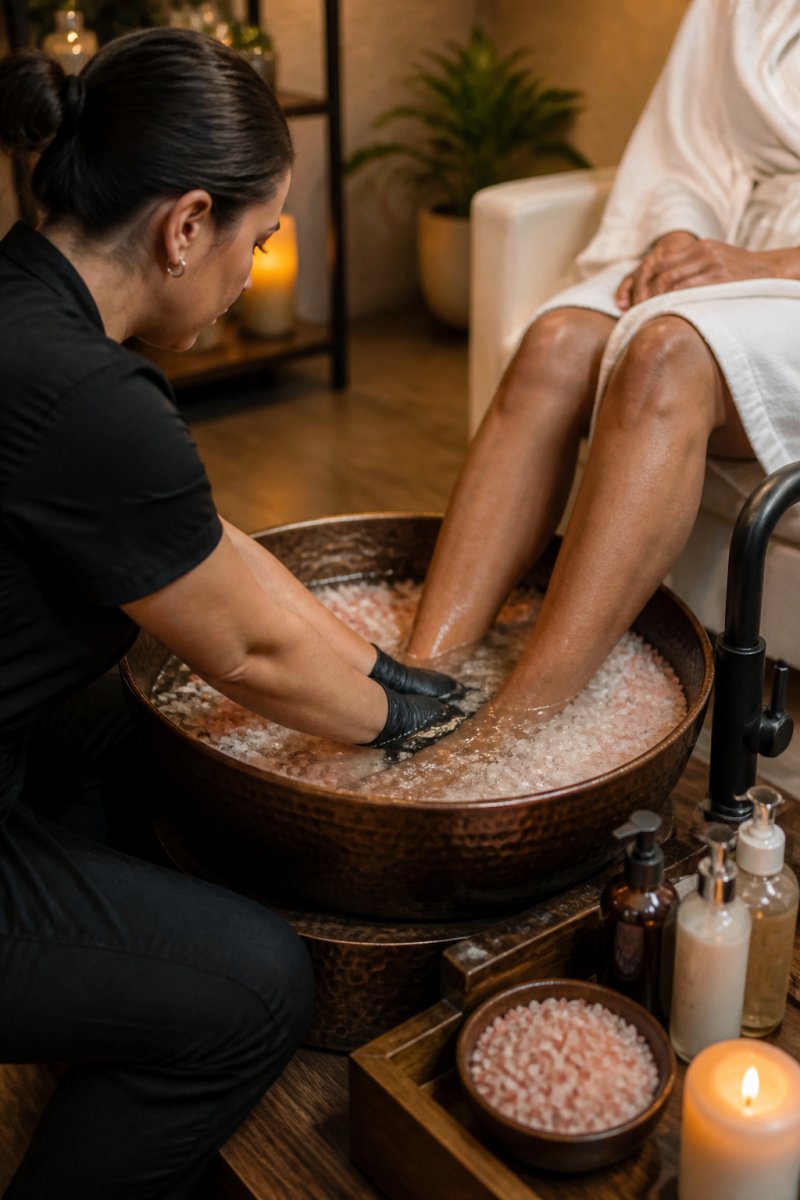
Foot Soaking and Preparation
The foot soak is where professional foot care begins. Soaking softens skin, opens pores, and prepares feet for the treatments that follow. Most spas soak feet for 5-10 minutes in warm water, but the water temperature and additives matter significantly.
Warm water, around 98-105 degrees Fahrenheit, relaxes muscles and increases circulation without causing discomfort. Water that's too hot can irritate sensitive skin or aggravate certain conditions. The soak should feel therapeutic, not punishing.
Adding mineral salts and essential oils elevates the experience from basic to professional. Our Mineral Foot Soak combines Sea Salt, Peppermint, and Eucalyptus to cleanse while providing aromatherapy benefits. Tea Tree Oil in the soak helps eliminate bacteria and fungi that contribute to odor and infection. Clients notice the difference immediately, their feet feel refreshed before any other treatment begins.

The soak also serves a diagnostic purpose. Watch how clients respond to the water temperature and how their skin reacts. Redness, excessive dryness, or signs of infection should be noted for later referral if needed.
Exfoliation and Callus Care
After soaking, skin is primed for exfoliation. This is where many spas cut corners, and it shows in results. Proper exfoliation removes dead skin cells and prepares the foot for moisturizing treatments that follow.
Gentle exfoliation using a pumice scrub works best for most clients. Our Revitalizing Foot Scrub uses natural pumice granules enriched with Aloe Vera and Vitamins B5 and E to exfoliate without causing micro-tears or irritation. Light circular motions for 30-60 seconds per foot is standard practice. The goal is removing dead skin, not aggressive scrubbing that damages healthy tissue.
Callus care requires a different approach. Calluses develop from pressure and friction, and they're protective, removing them too aggressively causes pain and rebound thickening. The professional approach uses a callus remover product that softens hardened skin chemically before manual removal. Our Intensive Callus Remover contains Salicylic Acid and Urea to break down callus tissue while Aloe Vera hydrates and conditions the surrounding skin. Apply the product, wait 2-3 minutes, then gently remove softened skin with a pumice stone or callus file.
Moisturizing and Final Treatment
The final stage locks in hydration and seals the benefits of earlier treatments. This is where clients feel the most dramatic difference in how their feet feel and look.
A quality foot cream applied while skin is still slightly damp seals in moisture more effectively than cream applied to dry feet. Our Hydrating Foot Cream contains Jojoba Oil, Aloe Vera, and Urea to restore moisture while preventing future dryness. The non-greasy formula absorbs quickly, so clients can put shoes on immediately without discomfort.
Many spas add a foot massage during this stage, using the cream as massage medium. A 5-minute foot massage improves circulation, reduces tension, and creates the spa experience clients remember and return for. Focus on the arch, heel, and ball of the foot, areas that carry the most tension.
Professional Foot Care Products for Spas: Selection and Application
Product selection defines the quality of your professional foot care program. Using generic drugstore products signals that you're offering a standard pedicure, not professional foot care.
Start with a complete cleansing product. The Refreshing Foot Cleanser removes bacteria, fungus, sweat, and odor-causing impurities while maintaining skin hydration.
The soak product should be mineral-based with therapeutic essential oils. Our Mineral Foot Soak provides the aromatherapy experience that makes clients feel they're receiving spa-level care, not just a service.
For exfoliation, a pumice scrub with conditioning ingredients prevents the over-drying that cheap scrubs cause. The Revitalizing Foot Scrub balances effective exfoliation with skin conditioning, so clients' feet don't feel tight or uncomfortable after treatment.

Callus management requires a dedicated product. A general foot cream won't soften calluses effectively. The Intensive Callus Remover's Salicylic Acid penetrates hardened skin while Urea and Aloe Vera prevent the irritation that harsher products cause.
Finally, a quality finishing cream completes the experience. The Hydrating Foot Cream should feel luxurious and absorb quickly.
Stock these products in your treatment room and train staff on proper application amounts and timing. Using high-quality products consistently builds your reputation for professional foot care.
How to Disinfect a Foot Spa: Hygiene and Safety Protocols
Foot spa hygiene is non-negotiable. Foot spas are warm, wet environments where bacteria and fungi thrive. Improper disinfection spreads infection between clients and damages your spa's reputation.
Between each client, drain the foot spa completely and refill with fresh water. Never reuse soak water, the water contains dead skin cells, bacteria, and fungi from the previous client's feet.
Clean the basin with a brush to remove visible debris, then disinfect using an EPA-registered disinfectant appropriate for foot spa equipment. Follow the disinfectant's contact time requirements, most require 10-20 minutes of contact with the surface (the EPA).
For jet-based foot spas, run disinfectant through the jets for the full contact time to reach internal surfaces where bacteria hide. Drain completely and rinse thoroughly with fresh water before the next client.
Daily maintenance includes checking for visible cracks or damage to the basin. Cracks harbor bacteria that disinfectants cannot reach.
Many states have specific requirements for foot spa disinfection. Check your state's cosmetology board regulations for mandatory protocols. Some states require daily deep disinfection with specific products. Others mandate weekly replacement of jets or hoses.
Stomp Footcare products support hygiene by including antimicrobial ingredients like Tea Tree Oil in our cleansers and soaks, but these products supplement, not replace, proper foot spa disinfection.
Foot Spa Treatment Menu Ideas and Service Offerings
Your professional foot care menu should offer variety while maintaining quality. Clients have different needs and budgets, and a tiered menu captures more revenue.
A basic professional foot care service includes soaking, exfoliation, callus care, and moisturizing. Price this at a moderate level, it's your entry point to clients new to professional foot care.
An upgraded service adds a foot massage and premium products. Some spas offer CBD-infused creams or essential oil blends that command higher prices.
A specialized service targets specific concerns. A "callus recovery" treatment focuses on intensive callus removal and conditioning, ideal for clients with severely hardened skin.

Seasonal offerings create urgency. A "summer sandal prep" service in spring focuses on heel care and appearance.
Package deals encourage repeat visits. A "four-week foot care plan" with weekly appointments at a discounted rate builds client loyalty and predictable revenue.
Communicate your menu clearly in your spa. Many clients don't know that professional foot care exists as a distinct service from basic pedicures. Educate them on the difference and the benefits.
Spa Pedicure Service Pricing: Building Profitability
Pricing professional foot care services requires balancing client expectations, product costs, and labor.
A basic professional foot care service should price higher than a standard pedicure but lower than full spa experiences. Most spas charge between $45-65 for a 30-minute professional foot care treatment. This price reflects the specialized products, trained staff, and therapeutic value clients receive.
Premium services with extended time or specialized treatments command $65-95. A 45-minute service with intensive callus care and foot massage justifies this pricing.
Calculate your product costs carefully. Our Stomp Footcare products, Mineral Foot Soak at $14.99, Revitalizing Foot Scrub at $9.99, Intensive Callus Remover at $9.99, and Hydrating Foot Cream at $9.99, represent a higher-quality investment than cheaper alternatives.
Labor costs matter too. A trained nail technician performing professional foot care should earn more than someone offering basic pedicures. Invest in staff training and compensation to retain quality technicians.
Track which services generate the most revenue and client satisfaction. Services clients rebook frequently are your most profitable offerings. Services with high costs and low client satisfaction need adjustment.
Staff Training and Scope of Practice
Your staff's training determines the quality and safety of professional foot care services. Untrained technicians create liability and damage your spa's reputation.
All staff performing foot care should understand the treatment stages, product application, and proper technique. Provide hands-on training with each product, explaining why each step matters.
Scope of practice is critical. Nail technicians can provide professional foot care, exfoliation, callus care, moisturizing, and massage. They cannot diagnose conditions, prescribe treatments, or claim to cure medical problems.
Common red flags requiring referral include severe redness, open wounds, signs of infection, unusual odor suggesting fungal conditions, or client reports of pain beyond normal soreness.
Create a simple referral process. Provide clients with local podiatrist or dermatologist recommendations. Document referrals in client records. This approach demonstrates professional judgment and protects your spa.
Ongoing training keeps staff current. Industry standards and product knowledge evolve. Schedule quarterly training sessions to review protocols, introduce new products, and discuss client feedback.
Professional foot care for spa owners is a business opportunity that grows as you invest in quality products, staff training, and client education.
Frequently Asked Questions
What is a foot spa treatment called?
A professional foot spa treatment is commonly called a pedicure or spa pedicure service. It typically includes foot soaking, exfoliation, callus removal, massage, and moisturizing. Some spas offer specialized versions like CBD pedicures or waterless pedicures. The exact name depends on your service menu and the specific treatments included in the package.
What products do spas use for professional foot care?
Professional spas use specialized foot care products including foot cleansers, mineral soaks with sea salt and essential oils, exfoliating scrubs with pumice, callus removers with salicylic acid, and hydrating foot creams. Quality products like Stomp Footcare's Refreshing Foot Cleanser ($12.99), Mineral Foot Soak ($14.99), Revitalizing Foot Scrub ($9.99), Intensive Callus Remover ($9.99), and Hydrating Foot Cream ($9.99) deliver professional results while supporting foot health and client satisfaction.
How much is a foot spa service?
Foot spa service pricing varies based on service length, location, and what's included. Basic pedicure services and specialized treatments can vary in cost. Your pricing should reflect product costs, staff wages, facility overhead, and local market rates. Consider offering tiered packages to serve different client budgets.
How do I disinfect my foot spa?
Proper foot spa disinfection involves draining water after each client, wiping the basin with an EPA-registered disinfectant, and running a cleaning cycle with a foot spa jet cleaner or appropriate sanitizing solution. Check your spa equipment manufacturer's guidelines for specific protocols. Allow the spa to air dry completely before the next use. For pedicure foot baths, many states require specific disinfection procedures—verify your local health department regulations.
Why should I invest in professional foot care products instead of budget alternatives?
Professional-grade foot care products deliver better results, client satisfaction, and safety. They're formulated with effective active ingredients like tea tree oil, salicylic acid, and hydrating compounds that address real foot concerns. Quality products reduce liability risk, support your staff's reputation, and justify premium pricing. Clients notice the difference and return for repeat services, building long-term profitability.
What should I know about contraindications and scope of practice for foot care services?
Nail technicians and estheticians should not treat fungal infections, severe skin conditions, or diabetic foot complications—these require referral to a podiatrist or dermatologist. Train staff to recognize contraindications and know when to recommend professional medical care. Proper scope of practice protects clients, reduces liability, and builds trust. Document client consultations and any referrals made.
