

Table of Contents
- Understanding the Causes of Runner's Calluses
- Step 1: Get Proper Running Shoe Fit and Sizing
- Step 2: Choose Moisture-Wicking Socks and Best Socks for Preventing Runner Blisters
- Step 3: Apply Lubricants and Anti-Chafe Products Before Running
- Step 4: Maintain Daily Foot Hygiene and Post-Run Recovery
- Step 5: How to Treat Foot Calluses at Home
- When to See a Podiatrist for Foot Calluses
- Frequently Asked Questions
Last Updated: October 4, 2026
Understanding the Causes of Runner's Calluses
Preventing foot calluses for daily runners starts with understanding what causes them in the first place. Calluses develop when your skin experiences repeated friction, pressure, or moisture buildup.
The culprits are simple: poorly fitting shoes, moisture trapped inside your socks, and high-impact forces from running. Sweat softens your skin and increases friction damage, especially when combined with shoes that don't fit properly.
Preventing foot calluses comes down to proper footwear, moisture-wicking socks, smart pre-run preparation, and understanding your running gait. If you strike the ground in a way that concentrates pressure on one spot, calluses form faster, which is why gait analysis matters.
The best approach tackles all factors at once: proper shoes, moisture-wicking socks, and lubricants to manage friction.
Step 1: Get Proper Running Shoe Fit and Sizing
Proper shoe fit is essential, but your running gait, how your foot strikes the ground and distributes pressure, determines where calluses form. Understanding your biomechanics is critical.
Understanding Your Foot-Strike Pattern
Your foot-strike pattern is how your foot makes contact with the ground. There are three primary patterns:
- Heel strikers land on the heel first. This concentrates impact force on the heel and ball of the foot, creating calluses in these high-pressure zones. About 75% of runners are heel strikers.
- Midfoot strikers land on the middle of the foot. Pressure distributes more evenly, but midfoot strikers often develop calluses on the outer edge of the foot if their shoes don't provide enough lateral support.
- Forefoot strikers land on the ball of the foot first. This puts sustained pressure on the metatarsal heads (the bones behind your toes), making forefoot strikers prone to calluses directly under the ball of the foot.
Overpronation (rolling inward) and supination (rolling outward) amplify callus formation by concentrating pressure on the inner or outer edge of the foot.
Getting a Professional Gait Analysis
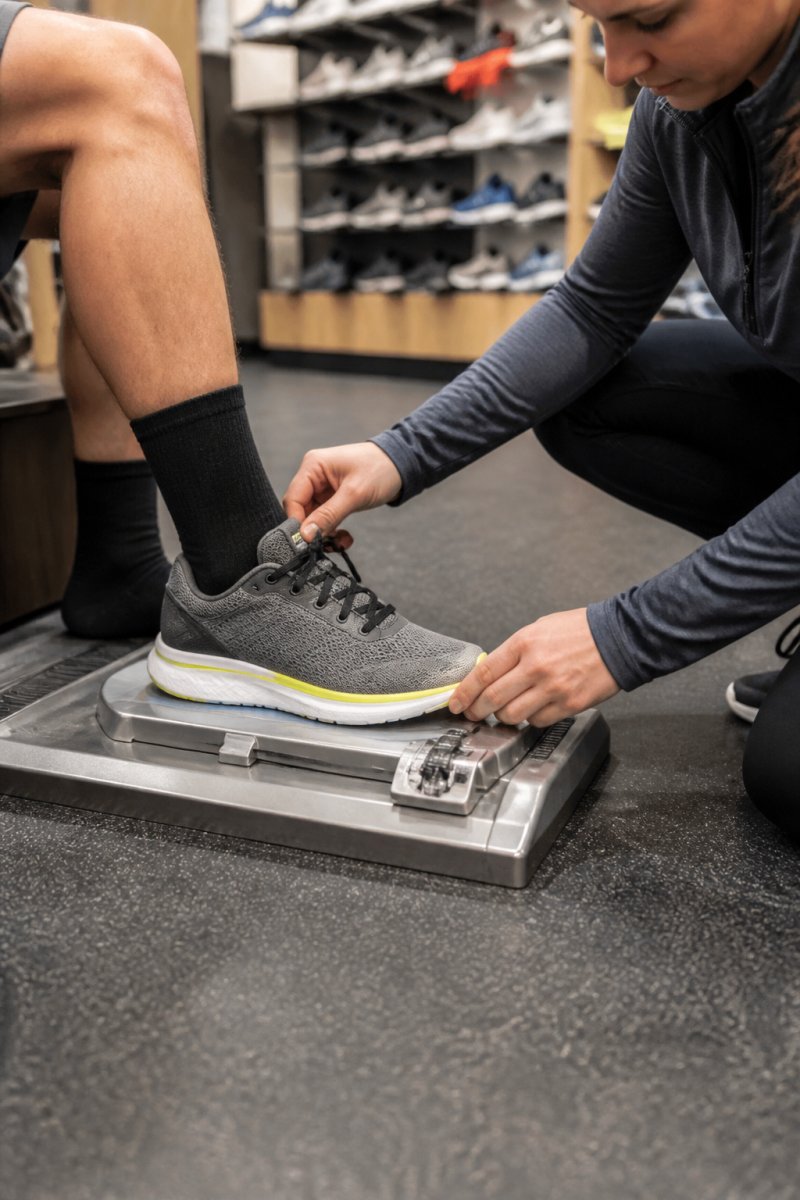
A specialty running store will analyze your gait on a treadmill to identify your foot-strike pattern, pronation type, and pressure distribution, information that reveals exactly where calluses will form and what shoe features you need.
A running specialist will recommend neutral shoes for neutral gait, stability shoes for overpronation, cushioned shoes for supination, or reinforced toe boxes for forefoot strikers.
Proper Shoe Fit Specifics
Proper fit requires: a thumb's width of space in the toe box, a snug heel without slipping, secure midfoot support, and appropriate width so your foot doesn't bulge over the sole.
Mileage and Shoe Replacement
Replace your running shoes every 300-500 miles. Worn-out cushioning loses its ability to absorb impact, increasing friction and callus risk. Track mileage using a running app or smartwatch.
Step 2: Choose Moisture-Wicking Socks and Best Socks for Preventing Runner Blisters
Cotton absorbs sweat and holds moisture against your skin, accelerating friction damage. Switch to moisture-wicking socks made from synthetic fibers or merino wool, which pull sweat away and dry fast.
What to look for in running socks:
- Material: Synthetic blends or merino wool (not cotton)
- Thickness: Medium or thick for cushioning and blister prevention
- Fit: Snug but not tight; seamless toe area
- Height: Crew or quarter-length to cover pressure points on your ankle
Change socks immediately after running to prevent skin softening and breakdown.
Merino wool has natural antimicrobial properties and keeps feet fresher longer, while synthetic blends are cheaper and dry faster.
Step 3: Apply Lubricants and Anti-Chafe Products Before Running
Before every run, apply a lubricant to high-pressure areas, the ball of the foot, heels, sides of toes, and any blister-prone areas, to create a barrier that cuts friction.
Use a thin layer of anti-chafe balm, which stays in place during activity better than regular moisturizer. Apply 5-10 minutes before running to let it set.
Step 4: Maintain Daily Foot Hygiene and Post-Run Recovery
Post-run recovery within 30 minutes prevents calluses from worsening and catches early damage before it compounds.
The Post-Run Recovery Ritual (Within 30 Minutes)
Timing is critical because your skin is warm and pores are open. Here's the sequence:
Minutes 0-10: Remove gear and cool down
- Remove shoes and socks within 10 minutes to prevent skin breakdown.
- If feet are very hot, soak in cool water for 5 minutes to reduce inflammation.
Minutes 10-15: Cleanse thoroughly
- Wash feet with cool water and mild soap, paying attention to the ball of the foot, heels, and between toes.
- Use a soft brush to gently remove dirt. Dry completely, especially between toes, to prevent moisture buildup.
Minutes 15-25: Targeted treatment
- For early callus signs, apply a gentle exfoliating product with natural acids (0.5-2%). Skip exfoliation on post-run days for areas without calluses.
- Apply hydrating foot cream while skin is slightly damp. Look for glycerin, hyaluronic acid, or ceramides.
Minutes 25-30: Inspection and monitoring

- Inspect feet daily for thickened patches, discoloration, or hardened skin on the ball of the foot, heels, and toe sides.
- If a callus doesn't improve within 7-10 days, escalate treatment.
Daily Foot Care for High-Mileage Runners
If you're running 5+ days per week, add an evening routine:
- Apply a richer foot cream or balm with urea (10-20%), which softens hardened skin and is safe for daily use.
- Wear moisture-wicking socks to bed if your feet tend to stay damp.
Weekly deep care (2-3 times per week):
- After 12+ hours of recovery, use a pumice stone on callused areas. Wet feet first, then gently rub in circular motions for 1-2 minutes.
- Follow with hydrating foot cream to prevent new callus formation.
Toenail maintenance:
- Keep your toenails trimmed short (flush with the end of your toe). Long nails change how your foot sits in the shoe and increase pressure on the toe box, worsening calluses on the sides of your toes.
- Trim nails after your post-run routine when they're soft and easier to cut.
Ingredient Focus: What to Look for in Foot Creams
Not all foot creams are equal for runners. Look for these ingredients:
- Glycerin or hyaluronic acid: These humectants pull moisture into your skin and keep it supple. They're essential for preventing the dryness that leads to callus formation.
- Ceramides: These lipids repair your skin barrier and prevent moisture loss. They're especially important if you have dry, cracked skin.
- Urea (10-20%): This softens hardened skin and prevents callus buildup. It's safe for daily use and more gentle than salicylic acid.
- Aloe vera: This soothes irritated skin and has mild anti-inflammatory properties. It's helpful if your feet are red or tender after long runs.
- Avoid: Heavy oils like mineral oil or petroleum jelly. These sit on top of your skin and don't absorb well, leaving your feet greasy and making it harder to wear socks.
Monitoring and Early Intervention
The goal of post-run recovery is to catch calluses before they become painful. A callus that's caught at day 2-3 (when it's just slightly thickened skin) takes 3-5 days to resolve with consistent care. A callus left untreated for 2 weeks becomes thick, painful, and takes 2-3 weeks to treat.
If you notice a callus forming:
- Increase exfoliation to 3-4 times per week (instead of 2-3)
- Apply urea-based cream daily
- Ensure your shoes still fit properly (sometimes calluses signal that your shoes have worn out)
- If the callus doesn't improve within 7-10 days, move to Step 5 (treating existing calluses) or see a podiatrist
Step 5: How to Treat Foot Calluses at Home
If calluses have already formed, you can treat them at home. The goal is to remove dead skin buildup while keeping the healthy skin underneath protected.
Start with exfoliation. A pumice stone or foot file works, but only use it on callused areas. Wet your feet first with warm water to soften the skin.
Stomp Footcare's Revitalizing Foot Scrub speeds this up. It contains natural pumice granules that exfoliate gently, plus Aloe Vera and vitamins that soothe and condition. Use it 2-3 times per week as part of your post-run routine.
For stubborn calluses, use a callus-removal product. Stomp Footcare's Intensive Callus Remover contains Salicylic Acid, which softens hardened skin and helps it shed naturally.

How to treat foot calluses at home in steps:
- Soak feet in warm water for 10 minutes to soften skin
- Exfoliate with a pumice stone or foot file (gentle pressure only)
- Apply Intensive Callus Remover to the callused area
- Wait the recommended time
- Gently remove softened skin
- Rinse and dry completely
- Apply Hydrating Foot Cream to prevent dryness
Don't pick or cut calluses yourself. You risk infection and creating open sores that hurt more than the original callus.
When to See a Podiatrist for Foot Calluses
See a podiatrist if your calluses are painful, bleeding, or not improving after 2-3 weeks of home treatment. A podiatrist can remove thick calluses safely and identify underlying biomechanical issues causing them.
You should also see a podiatrist if:
- Your calluses return repeatedly despite prevention efforts
- You have nerve pain or tingling along with calluses
- Your calluses are infected (red, warm, or draining)
- You're diabetic or have circulation problems (calluses are riskier for you)
- Your running gait is causing concentrated pressure in one spot
A podiatrist can perform gait analysis to see exactly where your foot strikes and how pressure distributes.
According to the American Podiatric Medical Association, a podiatrist can also rule out other foot conditions that mimic calluses, like plantar warts or corns. Getting the right diagnosis matters because treatment differs.
Preventing foot calluses for daily runners comes down to managing friction, moisture, and pressure. Start with proper shoes, switch to moisture-wicking socks, apply lubricant before runs, and maintain your feet daily.
If calluses do form, treat them early with exfoliation and targeted products like Stomp Footcare's Intensive Callus Remover and Revitalizing Foot Scrub.

Frequently Asked Questions
What causes foot calluses in runners?
Runner's calluses develop from repeated friction and pressure on specific areas of the foot, typically on the heel, ball of the foot, and toes. Calluses form as your skin thickens to protect itself against this friction. Factors like improper shoe fit, high-mileage training, running gait abnormalities, and moisture buildup accelerate callus formation. Understanding your foot strike pattern and pressure points helps you address the root cause rather than just treating the symptom.
What are the best socks for preventing runner blisters and calluses?
Moisture-wicking socks made from synthetic fibers or merino wool are essential for callus prevention. These materials pull sweat away from your skin, reducing friction and moisture buildup that leads to blisters and calluses. Look for socks with cushioning in high-pressure areas like the heel and ball of the foot. Avoid cotton socks, which absorb moisture and increase friction. Thicker socks provide additional pressure relief for high-mileage runners dealing with sensitive areas.
How long does it take to see results from callus prevention methods?
Most runners notice improved comfort within 2-3 weeks of implementing proper shoe fit, moisture-wicking socks, and daily foot care. Existing calluses soften gradually over 4-6 weeks with consistent exfoliation and moisturizing. Stomp Footcare's Intensive Callus Remover works to soften and reduce calluses with regular use, while the Revitalizing Foot Scrub helps remove dead skin through gentle exfoliation. Results depend on training volume, foot biomechanics, and how consistently you apply prevention strategies.
Can I prevent calluses if I run 10+ miles per week?
Yes, high-mileage runners can prevent calluses by combining multiple strategies: proper shoe fit, moisture-wicking socks, lubricants before runs, and daily foot hygiene. Post-run recovery is critical for high-volume training. After each run, wash your feet, dry thoroughly, and apply a hydrating foot cream like Stomp Footcare's Hydrating Foot Cream to lock in moisture. Weekly exfoliation with a pumice scrub removes dead skin before it builds up. If pressure points persist despite these measures, consult a podiatrist about gait analysis or orthotics.
