

Table of Contents
- What Causes Foot Inflammation and Swelling
- How to Reduce Foot Swelling Overnight
- Elevation and Compression: The Foundation of Fast Relief
- Ice or Heat for Foot Inflammation: Which Works Best
- Movement and Exercises to Improve Circulation
- Dietary and Hydration Strategies to Reduce Swelling in Feet
- When to See a Doctor for Swollen Feet
- Your Fast-Track Plan to Relief
- Frequently Asked Questions
Last Updated: October 9, 2026
What Causes Foot Inflammation and Swelling
"Swollen feet" has several different drivers, and the right fast fix depends on which one you have. Spend 60 seconds identifying it before you reach for ice or a soak. (Source: National Institutes of Health (NIH) on inflammation)
Inflammation vs. edema: how to tell them apart
These words get used interchangeably, but they describe different processes and respond to different treatments.
| Feature | Inflammation | Edema (fluid retention) |
|---|---|---|
| What it is | Immune response to injury or irritation | Fluid trapped in tissue spaces |
| Feel | Warm, tender, sometimes red | Puffy, doughy, often cool |
| Pain | Usually present, worse with use | Often painless or a dull ache |
| Timing | Follows a trigger (injury, overuse, flare) | Builds gradually over hours to days |
| Typical triggers | Sprain, strain, gout flare, infection, overuse | Standing, salt, heat, hormones, heart/kidney/liver issues, some medications |
| Best first move | Cold, rest, elevation, protect the area | Elevation, compression, movement, sodium reduction |
Many cases are mixed, a long day on your feet can cause edema that then irritates tissue and adds inflammation. When in doubt, start with elevation and cold, which help both.
Cause-specific guidance
- Injury (sprain, strain, rolled ankle). Cold and elevation for 48 hours, then gentle movement. Do not massage a fresh injury, it can increase bleeding and swelling. If you cannot bear weight or the foot looks deformed, get it evaluated.
- Prolonged standing or sitting. The most common everyday cause: fluid pools in the lowest part of the body. The fix is movement, elevation, and compression, not ice alone.
- Heat and humidity. Vessels dilate and feet swell. This is usually harmless and resolves with cooling and elevation.
- High sodium intake. Salt-sensitive people can swell within hours of a salty meal. Reducing sodium often shows results in 2-3 days.
- Medications. Certain blood pressure medications, steroids, and some diabetes drugs list swelling as a side effect. Do not stop a medication on your own; ask your prescriber.
Red flags: when to stop self-treating
Seek urgent care if you have any of the following:
- Swelling in only one leg or foot, especially with pain, warmth, or redness (possible blood clot)
- Redness, warmth, streaking, or fever (possible infection)
- Sudden shortness of breath, chest pain, or coughing up blood (possible clot that has traveled to the lungs, call emergency services)
- Swelling after an injury with severe pain, deformity, or inability to bear weight
- Swelling that spreads rapidly up the leg
- New swelling in pregnancy with headache, vision changes, or upper abdominal pain
Why this matters for speed
Treat edema like inflammation, ice, rest, no movement, and you slow recovery, because edema responds best to movement and compression.
How to Reduce Foot Swelling Overnight
What works overnight is the order and timing of remedies, not the list itself. Here is a sequenced plan you can start tonight.
The first 60 minutes (right when you get home)
- Lie down and elevate above heart level. Not just "up on a pillow", your feet must sit higher than your chest. Stack two or three pillows or use a wedge so the ankle is above the heart. Gravity is your biggest lever: feet below heart level pool fluid; above it, the venous and lymphatic systems drain fluid back toward your core. Aim for a continuous 30-45 minutes.
- Add cold at the same time. Apply an ice pack or cold gel wrap for 15-20 minutes while elevated, always wrapped in a thin towel, direct ice can cause a cold burn in as little as 10 minutes. Cold constricts surface blood vessels, limiting fluid and inflammatory mediators leaking into tissue. Repeat every 2 hours while awake.
- Skip the hot soak tonight if the swelling is new or one-sided. Heat feels good but it dilates vessels and can worsen fresh swelling. Save warm soaks for day 3 and beyond, once the acute phase has passed.
The 2-4 hour window before bed
- Put on compression if you have it. A 15-20 mmHg sock or wrap worn while elevated pushes interstitial fluid back into circulation. If you have never worn compression, put it on in the morning when swelling is lowest, not at night when your foot is already puffy. Remove it before sleep unless a clinician told you otherwise.
- Do 5 minutes of ankle pumps. Lying down, pull your toes toward your shin, then point them away. Repeat slowly for 20-30 reps. Your calf acts as a "second heart", every contraction squeezes the deep veins and pushes fluid upward. This beats passive elevation alone.
- Eat a low-sodium dinner. Sodium pulls water into the tissue. A single high-salt meal can add visible puffiness within hours in salt-sensitive people. Cook at home, skip the soy sauce, pickles, cured meats, and canned soup, and season with lemon, vinegar, or herbs instead.
- Drink water, but do not chug it. Aim for steady hydration through the day (roughly 8-10 cups) rather than a large volume before bed, which interrupts sleep. Paradoxically, dehydration makes your body hold onto fluid, so under-drinking is as bad as over-salting.
Overnight and morning check
- Sleep with your feet slightly elevated if you can tolerate it. A wedge under the mattress or a pillow under the calves (not just the heels) keeps drainage going. On your side, tuck a pillow between the knees and one under the lower legs.
- Reassess when you wake up. Normal swelling from standing, heat, or a long day should be visibly better by morning. If it is not, or if it is worse, or only one foot is swollen, stop self-treating and get evaluated.
What "overnight" realistically means
For everyday swelling from standing, travel, or a long day, most people see meaningful improvement within one night and near-resolution in 24-48 hours. After an injury or a chronic-condition flare, overnight relief is partial, you are managing symptoms, not curing the cause.
Elevation and Compression: The Foundation of Fast Relief
Elevation is the most powerful tool for foot swelling. Gravity works against you when your feet are down; raising them above heart level reverses that.
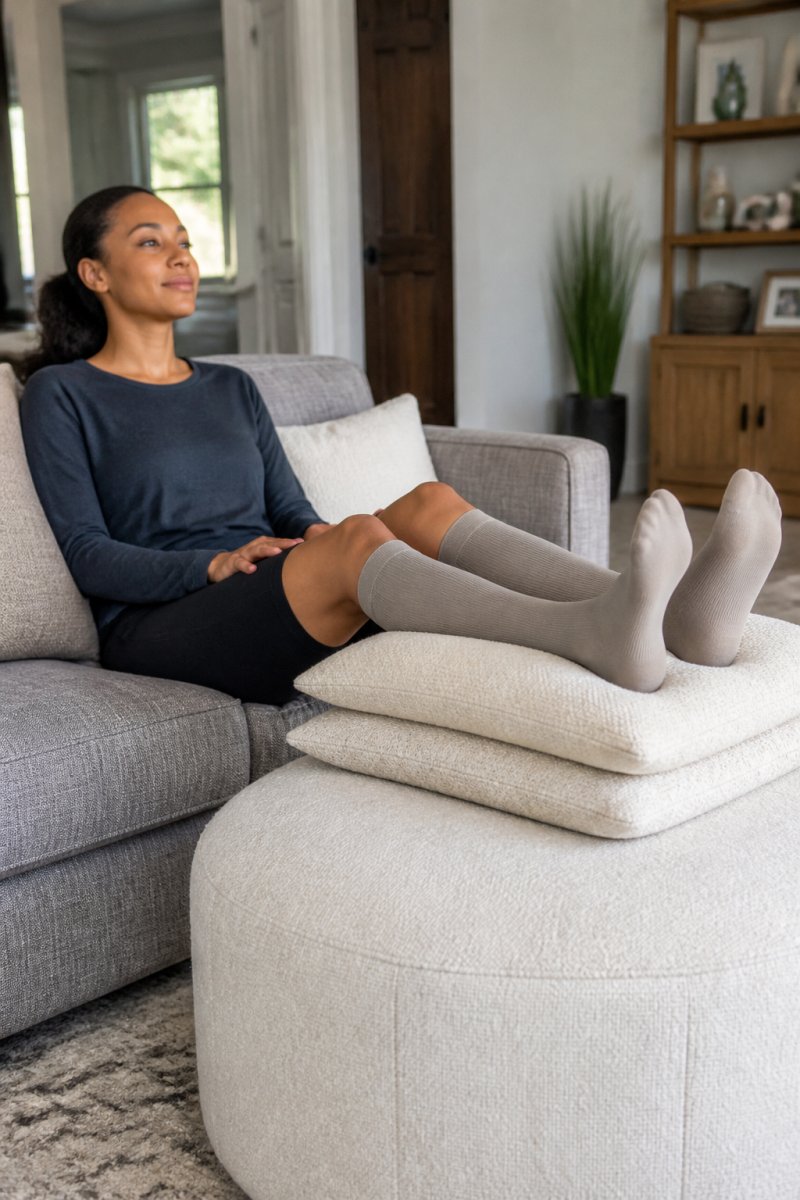
Prop your feet up for 20-30 minutes at a time, several times per day, with your feet higher than your chest. Do this after work, after exercise, and before bed.
Look for 15-20 mmHg for mild swelling; 20-30 mmHg works for moderate cases.
Combine elevation and compression for faster results: sit with your feet elevated while wearing compression socks. This drains swelling 2-3 times faster than either method alone.
Ice or Heat for Foot Inflammation: Which Works Best
The choice between ice and heat depends on what caused your swelling.
Use ice for recent swelling (within 24-48 hours). Ice reduces inflammation by shrinking blood vessels.
Many people find that ice first, then heat later, works best.
Stomp Footcare's Mineral Foot Soak contains sea salt, peppermint, and eucalyptus.

Never use extreme temperatures. Stick to 15-20 minute sessions with breaks between.
Movement and Exercises to Improve Circulation
Moving your feet and legs pumps fluid upward and prevents pooling. Stiff feet trap fluid.
Start with simple ankle circles.
Next, do calf raises. Stand and rise onto your toes, then lower back down.
Foot flexes also help. Sit down and pull your toes toward your shin, then point them away.
Do these exercises three to four times per day, combined with elevation and ice for faster relief.
Dietary and Hydration Strategies to Reduce Swelling in Feet
What you eat and drink directly affects foot swelling.
Cut sodium intake. Salt makes your body hold water.
Drink more water. Dehydration triggers fluid retention.
Eat potassium-rich foods. Potassium balances sodium and reduces fluid retention.
Limit alcohol and sugary drinks. Alcohol dehydrates you and increases sodium retention; soda and juice spike inflammation.
Make these changes for 3-5 days and watch swelling drop.
When to See a Doctor for Swollen Feet
Most foot swelling responds to home treatment within 3-5 days, but some cases need professional care. See a doctor if swelling doesn't improve after one week, persistent swelling can signal a circulation problem, kidney issue, or other condition that needs diagnosis. Watch for these red flags:
- Swelling in only one foot (suggests blood clot or infection)
- Warmth, redness, or pus (signs of infection)
- Severe pain that doesn't improve with ice
- Swelling after an injury with visible bruising or deformity
- Shortness of breath or chest pain (possible heart or lung issue)
- Swelling that spreads up your leg
These symptoms need professional evaluation. Don't wait or self-treat.
Also see a doctor if you have diabetes, heart disease, or kidney problems. These conditions affect how your body handles swelling. Your doctor can recommend safe treatments tailored to your health.
Your Fast-Track Plan to Relief
Here's how to reduce foot inflammation fast using everything above:
| Step | Action | Timeline | Frequency |
|---|---|---|---|
| 1 | Elevate feet above heart level | 20-30 minutes | 3-4 times daily |
| 2 | Apply ice wrapped in cloth | 15-20 minutes | 3-4 times daily |
| 3 | Add compression socks | Wear during day | Daily |
| 4 | Reduce salt in meals | Ongoing | Every meal |
| 5 | Drink 8-10 glasses water | Throughout day | Daily |
| 6 | Do ankle circles and calf raises | 10-15 minutes | 3-4 times daily |
| 7 | Take a 10-15 minute walk | After meals | Daily |
Start all steps today. You should notice improvement within 24 hours. Most swelling resolves in 3-5 days with consistent effort.
If swelling persists beyond one week, see a doctor. Ongoing swelling may signal an underlying issue that needs professional care.
Stomp Footcare's Energizing Foot Cream complements this plan. Apply it after ice therapy to soothe aching feet. The menthol cools tired feet while urea and aloe vera restore skin.

Frequently Asked Questions
What gets rid of inflammation in your foot?
Elevation above heart level, ice therapy, compression, and movement all reduce foot inflammation. Start with 15-20 minutes of ice wrapped in a cloth, then elevate your foot for 30 minutes. Add compression socks and gentle exercises like ankle circles and calf stretches. For persistent inflammation, reduce salt intake and stay hydrated. If pain lasts beyond 5-7 days or worsens, see a healthcare provider to rule out injury or underlying conditions.
How long does it take for foot inflammation to go away?
Mild foot inflammation often improves within 24-48 hours with proper elevation, ice, and rest. More significant swelling may take 5-7 days to noticeably decrease. Consistency matters: apply ice twice daily, keep feet elevated when sitting, and maintain movement to support circulation. Using a foot soak with mineral salts and applying energizing foot cream can accelerate recovery. Chronic inflammation lasting more than two weeks warrants a medical evaluation.
Should I use ice or heat for an inflamed foot?
Ice works best for acute inflammation and swelling within the first 48 hours. Apply ice wrapped in a cloth for 15-20 minutes, 3-4 times daily. After 48 hours, warm soaks become more effective for improving circulation and relieving aches. A mineral foot soak with sea salt and peppermint provides both warmth and therapeutic benefits. Never apply ice directly to skin, and avoid heat if your foot is hot, red, or shows signs of infection.
What can I drink to reduce swelling in my feet?
Water is your primary tool: aim for 8-10 glasses daily to support natural fluid drainage and reduce edema. Limit salt intake, which causes fluid retention. Herbal teas like peppermint or ginger may offer anti-inflammatory benefits. Avoid sugary drinks and excess caffeine, which can worsen swelling. Electrolyte-balanced water or coconut water supports hydration without excess sodium. Consistent hydration combined with elevation and movement produces faster results than any single remedy.
Foot swelling doesn't have to slow you down. The right combination of elevation, cold therapy, movement, and dietary changes works fast. Start today, follow the plan above, and you'll feel better within days. If swelling persists or worsens, consult a healthcare professional. At Stomp Footcare, we're here to support your foot health every step of the way. Shop our Energizing Foot Cream and Mineral Foot Soak to speed your recovery and keep your feet feeling great.
