

Table of Contents
- How to Heal Sore Feet Overnight: Your Complete Recovery Plan
- Home Remedies for Foot Pain at Night: Step-by-Step
- Ice or Heat for Foot Pain: What Works and When
- How to Relieve Foot Pain from Standing All Day
- Foot Stretches for Sore Feet: Overnight Relief Exercises
- Common Causes of Sore Feet and When to Seek Help
- Realistic Expectations: How Fast Will Your Feet Feel Better
- Prevention and Morning-After Care
- Frequently Asked Questions
Last Updated: October 18, 2026
How to Heal Sore Feet Overnight: Your Complete Recovery Plan
Sore, aching feet can derail your day before it starts, whether you're an athlete recovering from training, someone who stands 10+ hours at work, or a runner with post-workout soreness.
The key isn't a magic cure, it's combining the right techniques in the right order to reduce inflammation, ease pain, and rest your feet. Here's a step-by-step plan to start tonight.
Why Overnight Recovery Matters for Foot Health
Overnight is when your body does its best healing work: inflammation decreases, muscles relax, and damaged tissues repair themselves.
Most people collapse into bed and hope for the best, passive recovery. Active recovery with targeted techniques speeds up the process dramatically.
Sore feet typically come from overuse, prolonged standing, high-impact activity, or tight muscles. Inflammation peaks in the evening, so acting before bed interrupts the cycle and helps you wake with noticeably less pain.
Home Remedies for Foot Pain at Night: Step-by-Step
The best overnight recovery plan follows a specific sequence, each step building on the last. Start 30-60 minutes before bed.
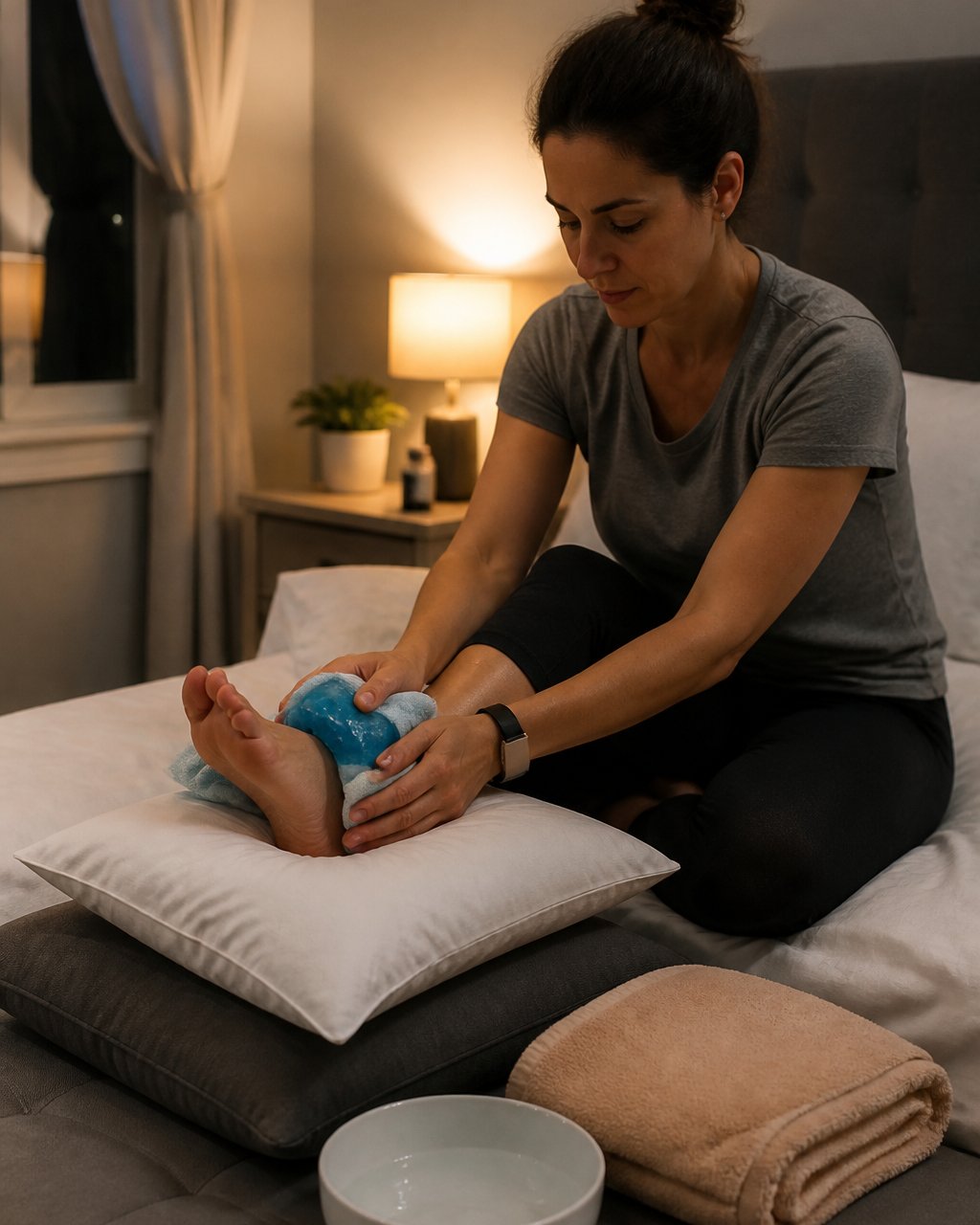
Person sitting on bed with feet elevated on pillows, applying ice pack to foot, warm towel nearby, relaxed evening setting with soft lighting
Step 1: Rest and Reduce Activity Immediately
The first step to healing sore feet overnight is real rest, genuinely reducing activity for at least the last few hours before bed so your feet recover without additional stress.
Here's what to do:
- Stop high-impact activities at least 3-4 hours before bed
- Avoid long walks or standing unnecessarily
- Sit or lie down as much as possible in the evening
When your feet stay active, blood flow keeps moving toward the muscles and tissues, perpetuating inflammation. Rest lets that normalize and inflammation decrease.
Step 2: Apply Ice or Cold Therapy
Cold therapy is one of the most effective ways to reduce inflammation and numb pain. Ice constricts blood vessels, decreasing swelling and slowing inflammation.
Apply an ice pack directly to the areas that hurt most:
- Use a standard ice pack, frozen gel pack, or even a bag of frozen peas
- Wrap it in a thin towel (don't apply ice directly to skin, it can cause irritation)
- Apply for 15-20 minutes
Cold therapy works best soon after activity. If your feet are killing you when you get home from work, ice first, the sooner you apply cold, the more effectively you reduce inflammation.
Pro Tip: Keep your ice pack in the freezer during the day so it's ready when you need it.
Step 3: Elevate Your Feet
Elevation is simple but powerful: feet above heart level let gravity drain fluid and reduce swelling.
Here's how to do it properly:
- Lie down on a couch or bed
- Place 2-3 pillows under your feet
- Keep your feet elevated for at least 20-30 minutes
Swelling accumulates after a long day of standing or activity. Lifting feet above heart level reverses that fluid buildup, and combined with ice, elevation is incredibly effective. Best time: right after you ice your feet, do ice therapy, then stay elevated while you relax.
Step 4: Soak in Warm Water with Epsom Salt or Mineral Soak
After icing and elevating, switch to warm water therapy. Ice reduces acute inflammation; warm water relaxes muscles and improves circulation to support healing.
A proper foot soak routine:

Mineral Foot Soak
- Fill a basin or foot tub with warm (not hot) water
- Add Epsom salt or a mineral soak like Stomp Footcare's Mineral Foot Soak ($16.99)
- Soak for 10-15 minutes
Epsom salt and mineral soaks contain magnesium and other minerals that reduce inflammation and ease muscle tension, while warm water increases blood flow.
Step 5: Apply Moisturizing Cream Before Bed
After your soak, your feet are primed to absorb moisturizer. Dry feet are more prone to cracking and calluses; moisturizing cream locks in hydration and supports skin health.
Apply a quality foot cream like Stomp Footcare's Hydrating Foot Cream ($13.99) or Energizing Foot Cream ($13.99):


- Use the Hydrating Foot Cream if your feet are dry or cracked
- Use the Energizing Foot Cream if your feet are tired and achy
- Apply generously to feet and lower legs
The massage matters: it increases blood flow, helps the cream penetrate deeper, and helps you relax before sleep.
Ice or Heat for Foot Pain: What Works and When
Should you use ice or heat? Both, at different times.
Use heat to relax muscles and improve circulation. Heat works best after acute inflammation decreases, loosening tight muscles and increasing blood flow.
The sequence matters. Ice first (to reduce inflammation), then heat (to relax and heal).
For overnight recovery specifically: ice in the early evening, warm soak 1-2 hours later, then moisturize and sleep.
How to Relieve Foot Pain from Standing All Day
Standing for long hours creates a specific type of foot pain: constant pressure, tightening muscles, and inflammation that builds through the day.
If you stand for 10+ hours at work, your overnight recovery plan needs a slight adjustment:
During the day:
- Wear supportive footwear (not flat shoes or high heels)
- Take sitting breaks every 2-3 hours
- Stretch your calves and feet during breaks
In the evening:
- Follow the full 5-step recovery plan above
- Pay extra attention to ice therapy (standing causes more inflammation)
- Soak longer (15-20 minutes instead of 10-15)
Standing-related pain often affects the arch, heel, and ball of the foot. Ice, elevation, soaking, and stretching together address all of it.
Foot Stretches for Sore Feet: Overnight Relief Exercises
Stretching is crucial for overnight recovery. Tight foot muscles and calves perpetuate pain; gentle stretching before bed relieves tension and improves flexibility. Do these stretches after your warm soak, when muscles are warm. Hold each 20-30 seconds, repeat 2-3 times, breathe slowly, and never push into sharp pain.
Calf Stretch for Heel and Foot Pain
Tight calves pull on your feet and contribute to heel pain and arch discomfort.
How to do it:
- Stand facing a wall, arms extended at shoulder height
- Step one foot back (about 2-3 feet behind your front foot)
- Keep your back heel flat on the ground
This stretch is essential if you stand all day or run regularly. Tight calves are one of the most common causes of foot pain. Stretching them regularly prevents pain from returning.
Toe Pointing and Flexing
This simple exercise strengthens and stretches the muscles on the bottom of your foot.
How to do it:
- Sit on a chair or bed
- Point your toes downward (like you're reaching your toes away from your body)
- Hold for 5 seconds
This exercise takes just two minutes but significantly improves foot flexibility and reduces morning stiffness. Do it every night.
Arch and Foot Muscle Activation
Strong foot muscles support your arch and reduce pain from overuse.
How to do it:
- Sit with your feet flat on the floor
- Try to "grip" the floor with your toes (curl them slightly without moving your foot)
- Hold for 5 seconds
This might seem too simple to matter, but it activates the intrinsic foot muscles that stabilize your arch. Regular practice prevents arch pain and improves foot strength.
Common Causes of Sore Feet and When to Seek Help
Understanding why your feet hurt helps you choose the right treatment. Different causes need slightly different approaches.
Identifying Your Foot Pain Cause
Morning stiffness: Tight foot muscles and plantar fascia overnight cause first-step pain.
Tight muscles: Calves, feet, and lower legs that lack flexibility create chronic foot pain.
Poorly fitting shoes: Shoes that don't support your foot properly cause pain throughout the day.
Most sore feet fall into one of these categories. Identifying yours helps you target your recovery effort.
Red Flags: When Home Care Is Not Enough
Home remedies work for most cases of sore feet. But some situations need professional evaluation.
Seek medical attention if you experience:
- Severe pain that doesn't improve with rest, ice, and elevation after 3-5 days
- Swelling that doesn't decrease with ice and elevation
- Pain that's localized to one specific area and feels sharp or stabbing
These symptoms can indicate plantar fasciitis, stress fractures, tendonitis, or other conditions that require professional diagnosis and treatment. Don't wait, see a healthcare provider if home care isn't working.
Realistic Expectations: How Fast Will Your Feet Feel Better
Here's the honest truth about overnight recovery: you won't wake up completely pain-free if your feet were severely sore.
What you can realistically expect:
- 30-50% reduction in pain by morning
- Noticeably less stiffness and improved mobility
- Ability to walk normally without limping
Why not 100% relief overnight? Overnight recovery is powerful, but it's not magic.
The good news: consistent overnight recovery accelerates healing. If you do the full routine every night for 3-5 nights, most sore feet feel significantly better.
Prevention and Morning-After Care
Once your feet feel better, don't stop the routine. Prevention is easier than recovery.
Every night, even when your feet feel fine:
- Stretch your calves and feet (5-10 minutes)
- Soak in warm water with minerals (10-15 minutes)
- Apply moisturizing cream
This nightly routine takes 30-45 minutes and prevents foot pain from returning.
Morning-after care:
- Start your day with a calf stretch before getting out of bed
- Wear supportive shoes immediately
- Stay hydrated throughout the day
The morning is when many people re-injure their feet.
If you're an athlete or someone who stands all day, consider using Stomp Footcare's Energizing Foot Cream ($13.99) as part of your daily routine.
Sore feet don't have to control your life.
Start tonight. Follow the five-step routine, do the stretches, and give your feet the care they deserve.
Frequently Asked Questions
How long does it take to heal sore feet overnight with these remedies?
Most people experience noticeable relief within 2-4 hours of starting these remedies, especially rest, ice, and elevation. Swelling and inflammation typically decrease significantly by morning if you follow all five steps. However, complete healing depends on the cause and severity—minor soreness from prolonged standing improves fastest, while conditions like plantar fasciitis may need several nights of consistent care before you feel fully recovered.
Should I use ice or heat for sore feet at night?
Start with ice for the first 15–20 minutes after your feet begin hurting, as cold therapy reduces inflammation and swelling. After icing, switch to warm water soaks with Epsom salt or a mineral foot soak for 10–15 minutes to relax muscles and improve circulation. This combination works better than heat alone because inflammation is the primary cause of overnight foot pain. Save pure heat for morning stiffness or chronic muscle tension.
Can I use Stomp Footcare products as part of an overnight foot pain routine?
Yes. The Mineral Foot Soak with Tea Tree Oil, Peppermint, and Eucalyptus is ideal for step 4 of the overnight routine—it cleanses, softens, and refreshes tired, aching feet while providing a soothing soak. Follow with the Energizing Foot Cream ($13.99) if your feet feel tight, or the Hydrating Foot Cream ($13.99) if dryness is contributing to discomfort. Both creams lock in moisture and support skin health without greasiness, making them perfect for bedtime application.
What foot symptoms mean I should see a doctor instead of treating at home?
Seek professional evaluation if you experience severe pain that doesn't improve after 3 nights of home care, visible swelling that worsens, redness or warmth suggesting infection, numbness or tingling, difficulty walking, or pain in only one foot with no clear cause. Also consult a doctor if you have diabetes or circulation problems, as foot pain in these cases needs professional assessment. Home remedies work best for soreness from overuse or prolonged standing, not underlying medical conditions.
