

Table of Contents
- Foot Recovery Tips for Active Lifestyles: A Complete Guide
- Choose Supportive, Properly Fitting Footwear
- Foot Stretches for Runners and Active People
- Foot Strengthening Exercises to Build Resilience
- Immediate Post-Activity Recovery Protocol
- Foot Recovery After Hiking: Activity-Specific Care
- Daily Foot Care Habits for Active Individuals
- When to See a Podiatrist for Foot Pain
- Frequently Asked Questions
Last Updated: October 11, 2026
Foot Recovery Tips for Active Lifestyles: A Complete Guide
Your feet take a beating when you're active. Whether you're running marathons, hiking trails, or standing on your feet for 10+ hours at work, recovery matters just as much as the activity itself. Neglect foot recovery tips and you'll notice soreness, blisters, calluses, and eventually pain that sidelines you entirely.
The good news is that foot recovery tips for active lifestyles aren't complicated. They're just systematic. This guide covers strategies from immediate post-activity care to daily habits that keep your feet resilient.
We'll walk you through footwear selection, targeted stretches, strengthening routines, and recovery protocols you can implement today. By the end, you'll have a complete framework for keeping your feet healthy, no matter how hard you push them.
Choose Supportive, Properly Fitting Footwear
Your shoes are the foundation of foot recovery. Shoes that don't fit properly or lack adequate support force your feet to work harder, increasing fatigue and injury risk. The wrong footwear can undo all your recovery efforts.
Proper footwear starts with fit. Your shoe should have roughly a thumb's width of space between your longest toe and the shoe's end. The heel should feel snug without slipping.
Activity-specific shoes matter more than most people realize. Running shoes are designed differently than hiking boots, which differ from everyday work shoes. Running shoes prioritize cushioning and forward motion.
Replace shoes when they've lost cushioning or structural support. Worn-out shoes are one of the most overlooked causes of foot pain in active individuals.
Foot Stretches for Runners and Active People
Tight feet and ankles lose mobility, which increases injury risk and slows recovery. Stretching addresses this directly. Regular foot stretches improve ankle mobility, reduce muscle tension, and prepare your feet for activity.
Essential Stretches for Foot and Ankle Mobility
Start with the calf stretch. Stand facing a wall with one leg forward and one leg back.
The plantar fascia stretch addresses the thick band of tissue running along your foot's bottom.
Perform ankle circles to improve ankle mobility. Stand on one leg (hold a wall for balance if needed) and slowly rotate your other ankle in circles.
The toe extension stretch opens the top of your foot. Kneel on a mat with the tops of your feet flat on the ground. Gently lean back, increasing the stretch. Hold for 20-30 seconds.
Perform these stretches daily, ideally in the morning and after activity. Consistency matters more than intensity.
Foot Strengthening Exercises to Build Resilience
Strong feet are resilient feet. Strengthening exercises build muscle endurance in your feet and lower legs, reducing fatigue and improving stability. These exercises are simple and require no equipment.
Progressive Strengthening Routine
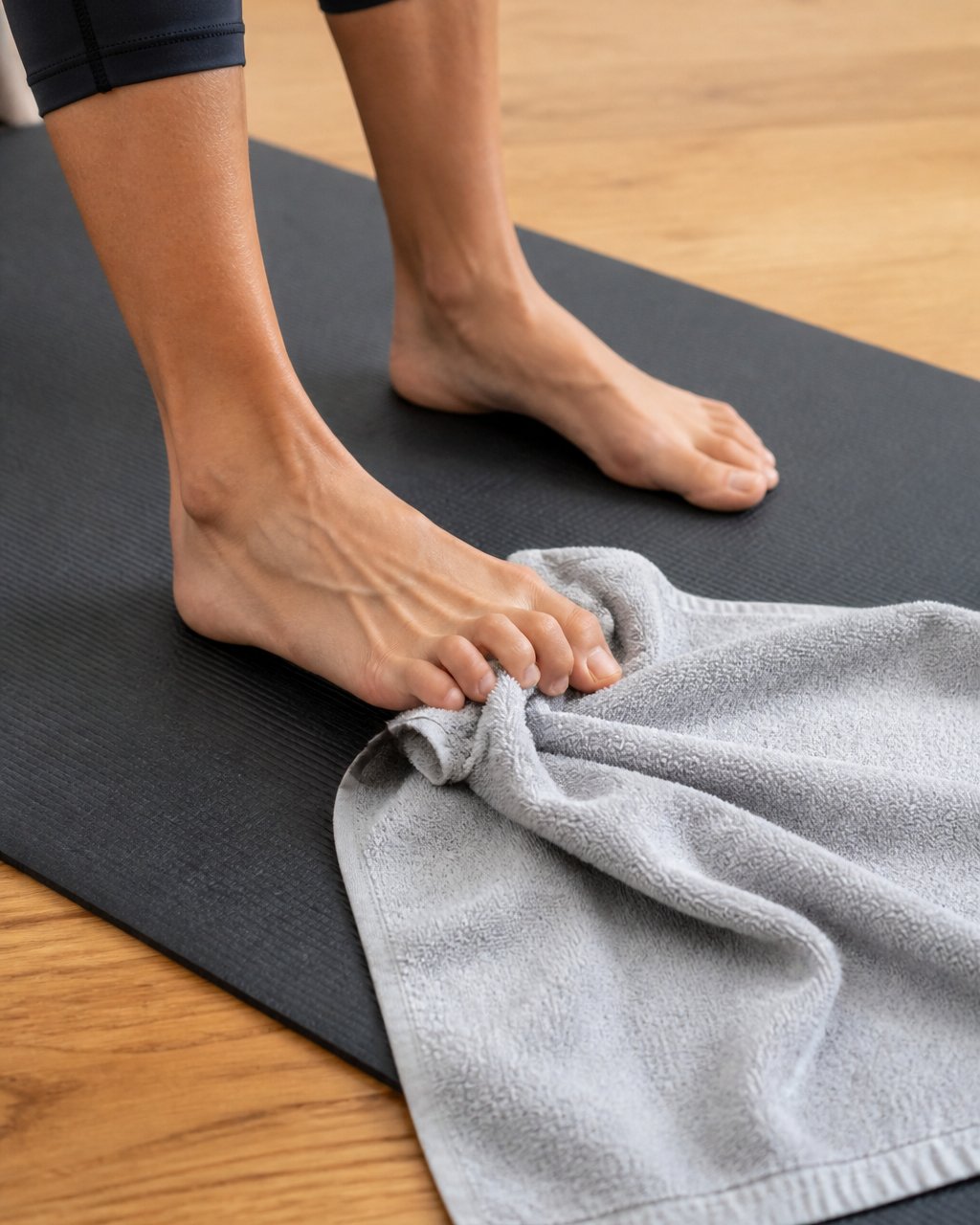
Start with toe grips. Sit in a chair and place a small towel on the floor in front of you. Using only your toes, scrunch the towel toward you.
Progress to single-leg balance work. Stand on one leg for 30 seconds, then switch. Increase to 60 seconds as balance improves.
Calf raises strengthen your lower leg. Stand with your feet hip-width apart and slowly rise up onto your toes, then lower back down. Perform 15 repetitions. Rest and repeat for 3 sets.
Add resistance band work once basic exercises feel easy. Loop a resistance band around your forefoot and practice ankle flexion and extension against the resistance.
Perform strengthening exercises 3-4 times per week, allowing at least one rest day between sessions.
Exercise |
Duration |
Frequency |
Target |
|---|---|---|---|
Toe grips |
10 reps |
3-4x/week |
Arch muscles |
Single-leg balance |
30-60 sec |
Daily |
Stability |
Calf raises |
15 reps x 3 sets |
3-4x/week |
Calf endurance |
Resistance band work |
15 reps each direction |
3-4x/week |
Ankle strength |
Immediate Post-Activity Recovery Protocol
What you do in the first 30 minutes after activity sets the tone for recovery. A structured post-activity routine prevents soreness from compounding and keeps your feet in better condition long-term.
The First 30 Minutes After Exercise
Stop activity gradually. Don't go from running to sitting immediately. Spend 5-10 minutes walking at a slower pace to let your heart rate come down and allow blood to circulate through your feet without the intensity of exercise.
Cool your feet if they feel hot or swollen. Add a mineral foot soak like Stomp Footcare's Mineral Foot Soak to the cool water for added benefit, the peppermint and eucalyptus provide a soothing effect while tea tree oil cleanses the skin.

Gently massage your feet. Use your hands or a massage roller to work out tension in your arches and calves. Spend 2-3 minutes on each foot. This improves circulation and prevents muscle tightness from setting in.
Remove your shoes and socks. Let your feet breathe. Moisture trapped in shoes after activity creates an environment for blisters and fungal growth. Dry your feet thoroughly, especially between your toes.
Recovery in the Hours and Days Following
In the hours after activity, keep your feet elevated when possible. Elevation reduces swelling by allowing fluid to drain away from your feet. Spend 20-30 minutes with your feet above heart level while sitting or lying down.
Continue stretching in the evening. Perform the foot stretches covered earlier for 5-10 minutes. Your muscles are warm and more receptive to stretching after activity.
Apply a recovery cream the next morning. Stomp Footcare's Energizing Foot Cream contains menthol for cooling relief and urea to restore vitality to tired feet. Apply it after washing and thoroughly drying your feet.

Monitor pain levels over the next 48-72 hours. Some soreness is normal.
Foot Recovery After Hiking: Activity-Specific Care
Hiking places unique demands on your feet. The uneven terrain, elevation changes, and extended duration create specific recovery needs. Hikers often experience blisters, calluses, and lower-leg soreness that differs from running-related foot issues.
After a hike, follow the immediate post-activity protocol above. Additionally, inspect your feet for blisters or pressure spots. If you find blisters, clean the area gently and cover it with a blister pad.
Hiking calluses develop from repetitive friction. Stomp Footcare's Hydrating Foot Cream locks in moisture with jojoba oil and aloe vera, preventing calluses from becoming painful.

Give your feet 1-2 days of reduced activity after a challenging hike. This allows muscles and connective tissues to recover.
Daily Foot Care Habits for Active Individuals
Recovery isn't just about post-activity protocols. Daily habits prevent problems from developing in the first place. Consistent daily care is the difference between feet that stay healthy and feet that accumulate damage over time.
Cleansing and Moisture Management
Wash your feet daily with warm water and a cleansing product designed for feet. Stomp Footcare's Refreshing Foot Cleanser contains tea tree oil to help wash away bacteria and fungus while maintaining skin hydration. Use it during your daily shower or evening wash.
Dry your feet thoroughly after washing. Moisture between your toes creates an environment for fungal growth and bacterial issues. Spend extra time drying between each toe with a clean towel.
Moisturize daily, especially if you have dry skin or calluses. Apply foot cream while your skin is still slightly damp from washing, this helps lock in moisture. The Hydrating Foot Cream absorbs quickly and works well for daily use.
Sock Selection and Foot Environment
Wear moisture-wicking socks during and after activity. Cotton socks absorb sweat and hold moisture against your skin, creating blisters and fungal environments.
Change socks immediately after activity if they're damp. Leaving wet socks on your feet accelerates blister formation and creates conditions for fungal growth.
Keep your feet clean and dry throughout the day. If you're on your feet for 10+ hours at work, change into fresh socks at midday if possible.
Use a foot spray for quick refreshment during the day. Stomp Footcare's Cleansing Foot Spray cleanses away sweat and buildup without requiring a full wash. The quick-drying formula makes it ideal for workplace or gym use.
When to See a Podiatrist for Foot Pain
Self-care handles most common foot issues. But some situations require professional assessment. Knowing when to seek help prevents minor problems from becoming serious injuries.
See a podiatrist if pain persists beyond one week despite following recovery protocols.
Severe swelling that doesn't improve within 72 hours warrants professional evaluation.
Visible deformity, such as a toe that appears bent at an unusual angle or a lump on your foot, needs professional assessment.
Recurrent blisters in the same location suggest a structural issue with your foot or your footwear.
Numbness, tingling, or nerve-related pain requires professional evaluation.
Active lifestyles demand resilient feet. Start with one product that addresses your biggest challenge, whether that's post-activity soreness with the Energizing Foot Cream, daily hydration with the Hydrating Foot Cream, or thorough cleansing with the Refreshing Foot Cleanser.
Frequently Asked Questions
How do you recover your feet after a long run or hike?
Start by resting and elevating your feet for 15-20 minutes to reduce swelling. Soak your feet in cool water or use a mineral foot soak to cleanse and refresh them. Apply a cooling foot cream like the Energizing Foot Cream to relieve aches and soreness. Gentle stretching of the calves, plantar fascia, and toes helps restore mobility. Over the next 24-48 hours, gradually return to light activity and continue daily stretching and strengthening exercises to support recovery.
What foot stretches for runners help prevent tightness and injury?
Key stretches include calf stretches (hold 30 seconds, 2-3 times per leg), plantar fascia stretches (rolling a tennis ball under your arch), toe touches to stretch the back of your legs and feet, and ankle circles for mobility. Perform these stretches after activity when muscles are warm, holding each stretch for 20-30 seconds without bouncing. Consistency matters more than intensity.
How long should I rest sore feet before exercising again?
Mild soreness typically resolves within 24-48 hours with proper care. Most active individuals can return to light activity (walking, easy cross-training) within 1-2 days if pain is manageable. Gradually increase intensity rather than returning immediately to your previous level.
What should I do for sore feet after exercise?
Immediately after activity, cool your feet with water or ice for 10-15 minutes to reduce inflammation. Soak in a mineral foot soak with sea salt and peppermint to cleanse and soothe tired feet. Use a refreshing foot cleanser to wash away sweat and bacteria. Apply the Hydrating Foot Cream to lock in moisture and prevent dryness. Elevate your feet above heart level for 15-20 minutes. Avoid high-impact activity for 24 hours, and focus on gentle stretching and rest.
When should foot pain be checked by a doctor or podiatrist?
Seek professional evaluation if pain is sharp or severe, persists beyond 7-10 days despite rest and care, is accompanied by swelling, redness, or warmth that suggests infection, or limits your ability to walk or perform daily activities.
How can I prevent blisters and pressure spots during running or hiking?
Proper footwear fit is essential—shoes should have a thumb's width of space at the toe and secure heel support without rubbing. Wear moisture-wicking socks designed for your activity to keep feet dry and reduce friction. Apply a protective barrier like blister prevention tape or balm to known pressure areas before activity. Keep feet clean and dry throughout the day, and inspect them regularly for early signs of irritation.
What foot strengthening exercises can I do daily to support active recovery?
Start with toe grips (curl toes around a towel for 10 reps), calf raises (15-20 reps on both legs), and single-leg balance work (30 seconds per side). Progress to resistance band exercises for foot inversion and eversion, and use a tennis ball to massage and strengthen the plantar fascia. Perform these exercises 3-4 times per week, gradually increasing reps and difficulty.
How do shoes and socks help prevent foot pain during activity?
Shoes with proper arch support, cushioning, and stability reduce stress on the plantar fascia and foot muscles during repetitive impact. Activity-specific shoes (running shoes for running, hiking boots for trails) are designed to handle the unique demands of each activity. Moisture-wicking socks keep feet dry, prevent blisters, and reduce bacterial growth that causes odor and irritation. Together, quality footwear and socks distribute pressure evenly and reduce friction.
